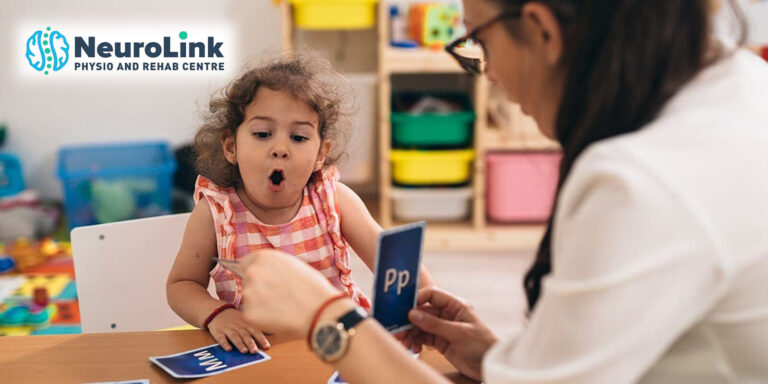
Every child grows and learns at their own pace. Some children start speaking early, while others take more time. Some quickly learn new skills, while others need extra help with everyday activities. However, when a child faces ongoing difficulties with speech, movement, learning, or social interaction, parents may wonder whether professional support is needed.
If you have been searching online for the best therapy centre near me gurugram you may already have questions about your child’s development. You might notice that your child is not speaking as expected, struggles to interact with other children, or finds simple daily tasks difficult.
The good news is that early support can help children develop important skills and become more confident. At NeuroLink Rehab Centre, families can explore developmental support options such as speech therapy, occupational therapy, ABA therapy, and special education, depending on the child’s individual needs.
Why Is Developmental Support Important for Children?
Child development includes many skills, such as talking, walking, playing, understanding instructions, managing emotions, and interacting with others.
Children do not all develop at the same speed. However, certain developmental differences may need professional attention, especially when they continue over time or affect everyday life.
Searching for the best therapy centre near me gurugram can help parents explore professional guidance when they have concerns about their child’s growth.
Developmental support may help children:
- Improve communication and language skills.
- Develop better movement and coordination.
- Learn daily living skills.
- Improve social interaction and play.
- Build confidence and independence.
- Manage certain behaviours and emotional challenges.
The type of support depends on the child’s age, abilities, and specific needs. A qualified professional can help parents understand which services may be suitable.
7 Signs Your Child May Need Developmental Support
1. Your Child Is Not Speaking as Expected
One of the first concerns parents notice is delayed speech. A child may use fewer words than expected for their age, struggle to form simple sentences, or have difficulty expressing basic needs.
For example, your child may point at an object instead of using words, find it difficult to ask for water, or become frustrated when others do not understand them.
Speech and language differences can have several causes, so parents should avoid making assumptions about the reason.
If you notice these concerns, consider speaking with your child’s paediatrician or a qualified speech and language therapist. A timely assessment can help identify the child’s communication needs.
Parents searching for the best therapy centre near me gurugram can look for a centre that offers individualised speech and language support.
At NeuroLink Rehab Centre, speech therapy may help children work on communication, language understanding, and expressing their needs, depending on their individual assessment.
2. Your Child Has Difficulty Understanding Instructions
Does your child struggle to follow simple instructions? For example, when you ask them to bring their shoes or put a toy away, they may seem unsure about what to do.
Sometimes, this may happen because the child is still developing language skills. Hearing difficulties, attention differences, or other developmental factors may also play a role.
Parents should observe whether the difficulty occurs regularly and in different settings, such as at home, school, or during play.
A professional assessment can help determine whether your child needs support with understanding language, attention, or learning.
When looking for the best therapy centre near me gurugram, consider a centre that understands the connection between communication, learning, and daily activities.
3. Your Child Finds Social Interaction Difficult
Children learn many skills through play and interaction. They gradually learn to take turns, share toys, respond to others, and participate in group activities.
Some children may find these interactions difficult. They may prefer playing alone, struggle to join group games, or have difficulty communicating with other children.
These behaviours do not automatically mean that a child has a developmental condition. However, ongoing difficulties with social communication may be worth discussing with a professional.
Developmental support can help children practise interaction, communication, and play skills in an appropriate environment.
If you are searching for the best therapy centre near me gurugram, look for professionals who understand each child’s strengths and challenges rather than using the same approach for every child.
NeuroLink Rehab Centre provides developmental support options that can be considered according to a child’s needs and professional recommendations.
4. Your Child Struggles With Everyday Activities
Daily activities help children become more independent as they grow. These may include eating with a spoon, holding a pencil, getting dressed, using the toilet, or following a simple routine.
If your child consistently struggles with age-appropriate activities, they may benefit from additional guidance.
For example, a child may find it difficult to hold small objects, use both hands together, manage clothing fasteners, or participate in basic self-care routines.
Occupational therapy may help children practise these activities, improve coordination, and develop skills for everyday life.
Parents searching for the best therapy centre near me gurugram should check whether occupational therapy is available and whether the centre assesses each child’s individual abilities.
At NeuroLink Rehab Centre, occupational therapy can be explored as part of a personalised developmental support plan where appropriate.
5. Your Child Has Difficulty With Movement and Coordination
Movement is another important part of child development. Children gradually learn to sit, crawl, stand, walk, run, jump, and use their hands for different activities.
Some children may experience difficulties with balance, coordination, posture, or age-appropriate movement.
You may notice that your child often struggles with activities involving both hands, has trouble coordinating movements, or finds certain physical tasks unusually difficult.
These concerns can have different causes. A paediatrician or qualified rehabilitation professional can help determine whether further assessment or physiotherapy is needed.
When choosing the best therapy centre near me gurugram, parents should consider whether the available services match their child’s specific motor and movement needs.
The right professional guidance can help families understand practical activities and support options for their child.
6. Your Child Has Difficulty Managing Sensory Experiences
Some children react strongly to everyday sounds, lights, textures, smells, or touch. Others may seek extra movement or sensory experiences to feel comfortable.
For example, a child may cover their ears in noisy places, avoid certain clothing textures, become distressed during grooming, or struggle with crowded environments.
Sensory responses vary from child to child. They should be understood in the context of the child’s overall development and daily functioning.
Occupational therapists can assess functional difficulties and suggest suitable strategies when sensory-related challenges affect everyday activities.
If you are searching for the best therapy centre near me gurugram, ask whether the professionals assess sensory needs as part of a broader understanding of your child’s development.
NeuroLink Rehab Centre offers occupational therapy as one of its developmental support options. Suitability should be discussed with the treating professional after an assessment.
7. Your Child Has Ongoing Behaviour or Learning Challenges
Some children find it difficult to manage changes in routine, wait for their turn, communicate frustration, or participate in classroom activities.
You may also notice that your child struggles to stay engaged in age-appropriate tasks or needs additional support to learn new skills.
Such difficulties can be related to many factors, including communication barriers, environmental stress, learning differences, or developmental needs.
Rather than blaming the child or assuming the behaviour is deliberate, parents can try to understand what the child is communicating through their actions.
Depending on the assessment, support may include behaviour-focused strategies, parent guidance, special education, or other appropriate developmental services.
ABA-based approaches may be considered for some children when clinically appropriate and delivered by suitably qualified professionals. The approach should respect the child’s dignity, individual needs, and well-being.
Parents looking for the best therapy centre near me gurugram should choose a provider that explains its methods clearly, sets meaningful goals, and involves families in the support process.
How Can the Right Therapy Centre Help Your Child?
Finding suitable developmental support can feel confusing, especially when parents are unsure which service their child needs.
A suitable centre should begin by understanding the child’s difficulties, strengths, interests, and everyday needs. The goal is not to compare your child with others but to identify useful ways to support their development.
When evaluating the best therapy centre near me gurugram, consider these important points.
Individual Assessment
Every child has different needs. A professional assessment helps identify areas where support may be useful and whether referrals to other specialists are needed.
Qualified Professionals
Ask about the qualifications, experience, and scope of practice of the professionals who will work with your child.
Personalised Goals
Developmental goals should be practical and meaningful. They may focus on expressing needs, participating in play, improving daily living skills, or communicating with family members.
Parent Involvement
Parents play an important role in a child’s learning. A good support plan should include clear communication with caregivers and practical suggestions that can be used at home.
Progress Reviews
Children’s needs can change over time. Regular reviews help families and professionals understand what is working and whether goals or strategies need adjustment.
A Respectful Environment
Children should feel safe, supported, and respected. Look for an environment that recognises individual differences and avoids shaming or unnecessarily pressuring children.
Which Therapy May Be Suitable for Your Child?
When searching for the best therapy centre near me, understanding the available services can help you ask the right questions.
Speech Therapy: May help children with speech, language understanding, communication, and expressing needs.
Occupational Therapy: May support everyday living skills, fine motor coordination, participation in activities, and functional sensory needs.
ABA Therapy: Uses structured, individualised teaching and behaviour-based strategies for certain developmental goals. It should be appropriate to the child and delivered ethically by trained professionals.
Special Education: Provides tailored educational support to help children develop learning, communication, and classroom participation skills.
Physiotherapy: May be recommended when a child needs support with movement, strength, balance, posture, or physical function.
Not every child needs every service. The right combination should be based on a suitable assessment and, when necessary, recommendations from the child’s healthcare team.
NeuroLink Rehab Centre offers several developmental support services, including speech therapy, occupational therapy, ABA therapy, and special education. Families can discuss their concerns with the centre to understand the next appropriate step.
When Should Parents Seek Professional Advice?
Parents do not need to wait until a developmental difficulty becomes severe before asking for help.
Consider seeking professional advice if your child:
- Consistently misses expected developmental milestones.
- Has difficulty communicating basic needs.
- Struggles with daily activities or social interaction.
- Has difficulties that affect participation at home or school.
- Loses skills they previously had.
If your child loses previously acquired language, movement, social, or other developmental skills, contact their healthcare professional promptly. Sudden loss of skills or other sudden neurological symptoms require urgent medical assessment.
A developmental screening or assessment can help clarify whether additional evaluation or support is needed. It does not automatically mean that your child has a developmental disorder.
Why Consider NeuroLink Rehab Centre?
Parents looking for the best therapy centre near me gurugram often want a place where their concerns are heard and their child receives appropriate support.
NeuroLink Rehab Centre provides developmental support services that families can explore based on their child’s needs.
The centre’s services include:
- Speech Therapy
- Occupational Therapy
- ABA Therapy
- Special Education
- School Readiness Program
The School Readiness Program runs from 10 AM to 4 PM. Parents should contact the centre to confirm current availability, eligibility, timings, and the suitability of its programmes for their child.
NeuroLink Rehab Centre has locations in Manikonda, A. S. Rao Nagar, and KPHB. Families can enquire about the most convenient location and available services before arranging a visit.
Choosing the right centre involves more than finding a nearby address. Parents should ask about assessments, professional qualifications, individual goals, parent participation, and how progress is reviewed.
How Can Parents Support Development at Home?
Professional therapy can be supported by simple, everyday activities at home. The right activities depend on the child’s age, abilities, and needs.
Here are a few practical ideas:
- Talk during daily activities: Describe what you are doing while eating, dressing, cooking, or playing.
- Read together: Use picture books and give your child time to respond, point, or communicate.
- Encourage play: Offer age-appropriate toys, puzzles, drawing activities, and opportunities for shared play.
- Use simple instructions: Give one clear instruction at a time when your child needs extra help understanding.
- Follow predictable routines: Consistent routines can help some children understand what happens next.
- Celebrate effort: Encourage attempts to communicate, participate, and learn instead of focusing only on mistakes.
- Stay in touch with professionals: Share your observations and ask which home activities are appropriate for your child.
These activities are not a replacement for professional assessment or therapy when needed. They can, however, provide useful opportunities for learning and connection.
Frequently Asked Questions
1. How do I find the best therapy centre near me for my child?
Start by identifying your child’s main concerns, such as speech, movement, daily living skills, or learning. Then compare nearby centres based on professional qualifications, available services, individual assessments, parent involvement, and progress reviews.
2. At what age can a child start developmental therapy?
Support can begin when a developmental concern is identified. There is no single age that suits every child. Speak with a paediatrician or qualified professional to understand your child’s needs and appropriate next steps.
3. Does delayed speech always mean a developmental disorder?
No. Delayed speech can have several causes and does not automatically mean that a child has a developmental disorder. A professional assessment can help identify the child’s communication needs and whether further evaluation is appropriate.
4. Which therapy is best for a child with speech difficulties?
Speech therapy may be helpful for children with communication or language difficulties. The appropriate approach depends on the child’s assessment, communication abilities, and individual goals.
5. Can occupational therapy help children become more independent?
Occupational therapy may help children practise everyday activities, improve functional skills, and participate more comfortably in home, school, and play routines. The outcomes depend on the child’s needs and therapy goals.
6. Is NeuroLink Rehab Centre suitable for every child?
The centre offers several developmental support services, but no single centre or therapy is suitable for every child. Parents should discuss their child’s needs with the professionals to understand whether the available services are appropriate.
7. Where can I find NeuroLink Rehab Centre?
NeuroLink Rehab Centre has locations in Manikonda, A. S. Rao Nagar, and KPHB. Contact the centre to confirm the address, current timings, available programmes, and appointment details for the location most convenient for your family.
Stay Connected With NeuroLink Rehab
For professional physiotherapy and rehabilitation support, get in touch with us today.
📞 Contact Us: 97 0303 0405
🌐 Explore Our Services:
https://neurolinkrehab.com/services/
📱 Follow Us on Instagram:
https://www.instagram.com/neurolink.hyd
📘 Follow Us on Facebook:
https://www.facebook.com/neurolinkrehab
NeuroLink Rehab — Supporting Better Recovery, Mobility & Independence.