Every child grows and learns at their own pace. Some children start speaking early, while others take more time to say their first words. Some children quickly learn to walk, play, and interact with others, while others may need additional guidance and support. These differences are a normal part of childhood development. However, when a child consistently struggles with communication, movement, learning, or social interaction, parents may consider seeking professional help from a trusted rehabilitation centre in Gurugram to understand their child’s developmental needs and explore suitable therapy options.
If you have searched online for the best therapy centre near me, you may already be looking for ways to support your child’s development. Understanding early signs of developmental delays can help you take the right steps at the right time. Early support may help children develop important skills, improve their independence, and participate more comfortably in everyday activities.
For families looking for a rehabilitation centre in Gurugram, Neurolink Rehab Centre can be a starting point for exploring developmental rehabilitation and therapy options. The right support depends on the child’s individual needs, developmental history, and professional assessment.
What Is Child Developmental Support?
Child development refers to how children learn to move, communicate, think, interact with others, and manage everyday activities as they grow. Developmental support includes therapies and activities that help children build these skills according to their individual needs.
Depending on the child’s challenges, developmental support may include:
- Speech therapy: Helps children improve communication, understanding, speech sounds, and language skills.
- Occupational therapy: Supports daily living skills, hand coordination, sensory processing, and participation in everyday activities.
- Physiotherapy: Helps improve movement, balance, strength, posture, and coordination.
- Developmental therapy: Focuses on age-appropriate skills, play, learning, and overall development.
- Behavioural and social skills support: Helps children develop communication, emotional regulation, social interaction, and everyday routines when appropriate.
Not every child needs all these therapies. A qualified professional can assess your child’s needs and recommend a suitable plan.
7 Signs Your Child May Need Developmental Support
Recognising developmental differences early can help parents understand when additional support may be beneficial. The following signs do not automatically mean that a child has a developmental disorder. They are simply reasons to observe your child’s progress and seek professional advice when needed.
1. Your Child Has Difficulty Speaking or Communicating
Communication is an important part of a child’s development. Babies gradually begin making sounds, responding to voices, using gestures, understanding simple words, and eventually speaking in sentences.
Some children may take longer to develop these skills. However, parents may benefit from seeking guidance if their child:
- Uses very few words compared with what is expected for their age.
- Has difficulty expressing basic needs and feelings.
- Rarely uses gestures, such as pointing or waving, when expected.
- Struggles to understand simple instructions appropriate for their age.
- Has difficulty combining words as language develops.
- Becomes frustrated frequently because others cannot understand them.
For example, a child may cry or pull an adult towards an object instead of using words or gestures to communicate. This behaviour alone does not establish a developmental delay, but repeated communication difficulties may deserve attention.
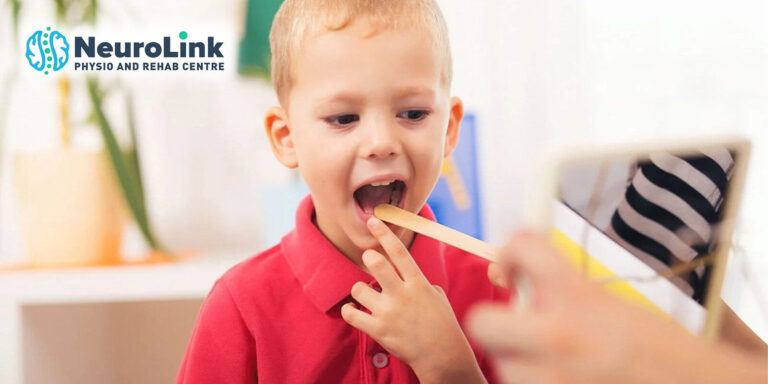
A speech and language therapist can evaluate your child’s understanding, expressive language, and communication abilities. The therapist may use play-based activities, pictures, sounds, and everyday interactions to encourage communication.
If you are searching for the best therapy centre near me because your child is struggling to speak, consider a centre that can explain its assessment process and the type of speech and language support available.
At Neurolink Rehab Centre, parents can enquire about relevant rehabilitation and therapy services to understand which options may suit their child’s needs.
2. Your Child Has Difficulty With Walking, Balance, or Coordination
Physical development allows children to explore their surroundings, play independently, and participate in everyday activities. As children grow, they gradually develop skills such as sitting, standing, walking, running, climbing, and using their hands to handle objects.
Parents may wish to seek professional advice if their child:
- Has difficulty achieving age-expected movement milestones.
- Frequently struggles to maintain balance while walking.
- Finds it unusually difficult to climb stairs or move around safely.
- Has persistent difficulties coordinating both hands during play.
- Avoids physical activities because movement seems challenging.
- Shows unusual stiffness, weakness, or differences in movement between the two sides of the body.
For instance, a child who repeatedly struggles with balance or finds it difficult to participate in age-appropriate physical play may benefit from an assessment by a qualified healthcare professional.
Physiotherapy may be recommended when a child needs support with strength, balance, posture, coordination, or functional movement. Activities are selected according to the child’s abilities and may include guided movement, balance exercises, and age-appropriate play.
Families searching for a rehabilitation centre in Gurugram should look for professionals who assess movement difficulties carefully instead of offering the same exercise programme to every child.
It is also important to remember that children develop physical skills at different rates. A single delayed milestone does not necessarily indicate a serious problem. Persistent difficulties, multiple delayed milestones, or concerns about movement quality deserve professional attention.
Important: If your child suddenly loses the ability to walk or develops sudden weakness, seek urgent medical care rather than waiting for a routine therapy appointment.
3. Your Child Finds It Difficult to Interact With Others
Social development helps children connect with family members, play with other children, respond to social situations, and develop relationships. These skills gradually develop through everyday experiences and interactions.
Some children may prefer quiet activities or need more time to feel comfortable around others. However, persistent difficulties with social communication may indicate a need for further assessment.
Possible signs include:
- Rarely responding to their name in situations where they can hear.
- Finding it difficult to share attention with another person.
- Showing limited interest in interacting with familiar people.
- Struggling to participate in simple turn-taking games.
- Having difficulty understanding basic social cues appropriate for their age.
- Rarely engaging in pretend play when such play would be expected developmentally.
For example, a child may enjoy playing with a toy but find it difficult to show the toy to a parent or share the enjoyment of the activity. This is only one observation and cannot be used on its own to diagnose a developmental condition.
Differences in social communication can occur for several reasons, including hearing difficulties, language delays, and neurodevelopmental differences such as autism. A comprehensive assessment can help identify what kind of support, if any, is appropriate.
Parents looking for a rehabilitation centre in Gurugram can ask whether the centre offers developmental assessments or works with qualified professionals who can guide families towards suitable evaluations.
The aim is not to force a child to behave like everyone else. It is to help the child communicate, connect with others, and participate in daily life in ways that respect their individual needs.
4. Your Child Has Difficulty With Everyday Activities
As children grow, they gradually learn practical skills such as feeding themselves, holding a spoon, putting on clothes, washing their hands, using crayons, and managing simple routines.
Some children need additional time and assistance to develop these abilities. However, persistent difficulty with several everyday activities may suggest that additional support could be useful.
You may notice that your child:
- Struggles to hold a spoon, cup, pencil, or other age-appropriate objects.
- Finds it difficult to manage simple dressing tasks.
- Has difficulty using both hands together during play.
- Avoids drawing, building blocks, puzzles, or similar activities.
- Needs substantially more assistance than expected for everyday routines.
- Finds it difficult to perform familiar tasks despite repeated opportunities to practise.
These challenges may be related to fine motor skills, coordination, sensory preferences, attention, or other developmental factors.
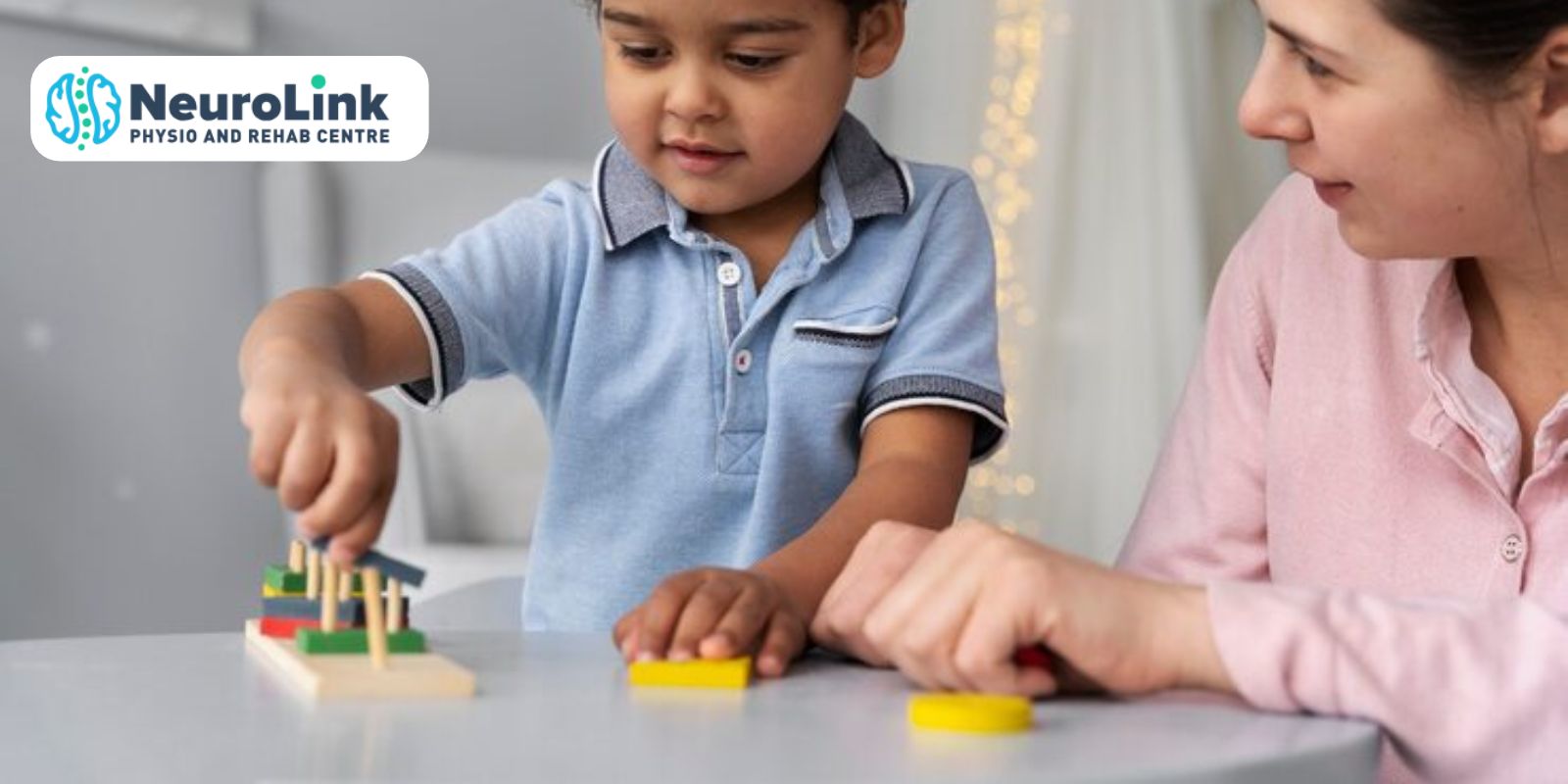
Occupational therapy can help children practise functional skills through meaningful, age-appropriate activities. Depending on the child’s needs, this may involve practising hand movements, developing coordination, learning self-care routines, or adapting tasks to make them more manageable.
If you are considering Neurolink Rehab Centre, ask which occupational therapy or functional skill development services are available and how progress is evaluated.
When comparing options for the best therapy centre near me, focus on whether the recommended activities relate to your child’s actual daily challenges. A helpful programme should support practical improvements in participation and independence rather than concentrate only on completing exercises during sessions.
Parents can also support development at home by allowing children to practise simple tasks safely, offering encouragement, and giving them enough time to complete activities without unnecessary pressure.
5. Your Child Has Difficulty Paying Attention or Following Instructions
Children naturally have different attention spans. Young children may move quickly between activities, become distracted by interesting objects, or need reminders to finish simple tasks. These behaviours can be part of normal development.
However, ongoing difficulties with attention, understanding, or following instructions may sometimes affect a child’s learning and daily routines.
Possible signs include:
- Frequently struggling to follow familiar, age-appropriate instructions.
- Finding it difficult to remain engaged in activities suitable for their developmental stage.
- Having trouble completing simple tasks without repeated assistance.
- Becoming easily overwhelmed by everyday routines.
- Struggling to participate in preschool or other learning activities.
- Showing difficulties with organisation and transitions that interfere with daily life.
For example, a child may find it difficult to follow a familiar two-step instruction, although it is important to consider their age, language understanding, hearing, and the complexity of the task.
Attention difficulties can have many explanations. Sleep problems, stress, language difficulties, hearing issues, learning differences, and attention-related conditions may all affect a child’s ability to follow instructions.
Parents should avoid assuming that a child is lazy, disobedient, or deliberately uncooperative. Understanding the reason behind the behaviour is more helpful than assigning blame.
A developmental assessment can help determine whether the child needs additional evaluation, learning support, or a therapy programme.
When researching a rehabilitation centre in Gurugram, ask whether the professionals consider the child’s complete developmental profile and collaborate with other specialists when necessary.
At home, parents can try giving one instruction at a time, using simple language, reducing distractions, and maintaining predictable routines. These strategies may make everyday activities easier, but persistent difficulties should be discussed with an appropriate professional.
6. Your Child Shows Strong Sensory Reactions
Children experience the world through their senses, including touch, sound, sight, smell, taste, movement, and body awareness. Some children are particularly sensitive to certain experiences, while others seek additional movement or sensory input.
Sensory preferences vary naturally. However, when sensory reactions repeatedly interfere with eating, dressing, sleeping, learning, playing, or family routines, professional guidance may be helpful.
Parents may notice that their child:
- Becomes extremely distressed by certain everyday sounds.
- Strongly avoids particular clothing textures or grooming activities.
- Finds crowded or noisy environments difficult to manage.
- Seeks constant movement in ways that affect safety or participation.
- Has difficulty coping with changes in familiar sensory experiences.
- Avoids a wide range of foods because of their texture, smell, or appearance.
For example, a child may cover their ears in a busy shopping centre or become upset when asked to wear particular clothing. These reactions can have different causes, and the context matters.
Sensory-related difficulties may occur alongside other developmental differences, but sensory behaviours alone do not establish a diagnosis.
An occupational therapist with appropriate training may assess how sensory experiences affect the child’s daily functioning. Recommendations should be based on an individual assessment and the child’s specific goals.
Families exploring a rehabilitation centre in Gurugram can ask about the professional’s experience with sensory-related concerns and how suggested activities will help the child participate more comfortably in everyday situations.
The goal is to improve comfort, safety, and participation rather than eliminate every sensory preference. Parents should also avoid forcing children into distressing situations in an attempt to make them adjust.
7. Your Child Is Struggling to Learn Age-Appropriate Skills
Children learn through play, exploration, communication, observation, and everyday experiences. As they grow, they gradually develop skills such as recognising familiar objects, solving simple problems, understanding routines, remembering information, and participating in learning activities.
Some children need extra support with these skills, especially when they have developmental, communication, motor, or learning difficulties.
Possible signs include:
- Difficulty learning simple skills despite repeated opportunities.
- Struggling with age-appropriate matching, sorting, or problem-solving activities.
- Finding it difficult to remember familiar routines.
- Having persistent difficulties with early learning activities.
- Struggling to transfer a skill learned in one setting to another.
- Showing delays across several areas of development rather than one isolated skill.
For example, a child may learn to complete a simple activity with an adult but find it difficult to repeat the activity independently. This may indicate that the child needs more practice, a different teaching approach, or further assessment.
Developmental differences can affect children in different ways. Some may need help with communication, while others may need support with movement, learning, social participation, or self-care.
A professional assessment can help identify strengths, areas of difficulty, and realistic goals for the child’s age and developmental level.
If you are searching for the best therapy centre near me, look for a centre that recognises your child’s existing abilities and builds on them. Developmental support should be individualised, practical, and respectful of the child’s pace.
Neurolink Rehab Centre can be contacted to enquire about available rehabilitation services and whether the centre can support your child’s particular developmental concerns.
Why Is Early Developmental Support Important?
Early developmental support can help children practise important skills during a period of rapid growth and learning. When a concern is identified, an appropriate assessment may help families understand their options and plan the next steps.
Potential benefits of suitable developmental support include:
1. Better communication: Speech and language support may help children express needs, understand others, and participate in everyday conversations.
2. Improved movement: Physiotherapy may support balance, strength, coordination, and functional movement when indicated.
3. Greater independence: Occupational therapy and other interventions may help children practise daily living activities, depending on their needs.
4. Stronger social participation: Individualised support may help children engage in play, shared activities, and communication with other people.
5. More informed parenting: Professional guidance can help parents understand developmental differences and use practical strategies at home.
6. Individualised learning goals: Assessments can help families and professionals focus on meaningful, achievable goals.
It is important to understand that outcomes vary. No therapy can guarantee that a child will reach every developmental milestone within a specific timeframe. Progress depends on many factors, including the child’s needs, the type of intervention, consistency, and other health or developmental considerations.
Parents should seek advice when concerns arise rather than waiting for a child to fall significantly behind. Early support is about understanding needs and providing suitable opportunities to learn, not labelling children unnecessarily.
How to Choose the Best Therapy Centre Near Me
Choosing a therapy centre can feel overwhelming, especially when parents are concerned about their child’s development. The right choice should be based on professional qualifications, the child’s individual needs, communication with families, and the suitability of the recommended services.
Here are six factors to consider.
1. Qualified and Experienced Professionals
Check whether the professionals have appropriate qualifications, training, and experience in working with children. Ask who will assess your child and who will provide the recommended therapy.
2. Individualised Assessment and Goals
Every child has different strengths and challenges. A suitable programme should begin with an assessment and set goals that relate to the child’s everyday needs.
3. Clear Communication With Parents
Parents should understand the purpose of therapy, the expected activities, how progress will be reviewed, and what they can do at home.
4. Age-Appropriate and Engaging Activities
Children often learn through play and practical experiences. Activities should be appropriate for the child’s developmental stage, interests, abilities, and comfort.
5. Regular Progress Reviews
Ask how the centre measures progress and adjusts the programme when necessary. Goals should be meaningful and reviewed based on the child’s response to intervention.
6. Convenient Location and Practical Accessibility
Regular appointments may require time and planning. Families looking for a rehabilitation centre in Gurugram should consider travel time, appointment availability, accessibility, and whether the schedule is manageable.
Before selecting Neurolink Rehab Centre or any other provider, contact the centre directly to confirm the services offered, professional credentials, fees, appointment availability, and whether an assessment is appropriate for your child’s needs.
Do not rely on online rankings alone. A centre described as the best by one family may not be the right fit for another child.
What Happens During a Child Development Assessment?
Parents sometimes delay seeking help because they are unsure what will happen during an assessment. Knowing what to expect can make the process easier.
Depending on the concern, an assessment may involve:
Developmental history: The professional may ask about pregnancy and birth history, early milestones, communication, movement, health, and everyday behaviour.
Observation: The child may be observed during play, movement, communication, or simple age-appropriate activities.
Skill assessment: The professional may examine specific abilities, such as speech, motor skills, coordination, social communication, or daily living skills.
Parent discussion: Parents can share their concerns, explain what they observe at home, and discuss activities that their child finds difficult.
Recommendations: Depending on the findings, the professional may suggest therapy, further assessment, medical review, or practical strategies for home.
Not every child requires a formal diagnosis before receiving appropriate support. However, some concerns need evaluation by a paediatrician, developmental paediatrician, psychologist, audiologist, or another qualified specialist.
A therapy centre should be transparent about the limits of its services and refer families to other professionals when necessary.
When contacting a rehabilitation centre in Gurugram, prepare a short list of your concerns and the skills you would like your child to develop. This can help make the initial discussion more useful.
How Parents Can Support Development at Home
Professional support is only one part of a child’s development. Everyday interactions also provide valuable opportunities to practise new skills.
Here are some simple ways to encourage development at home.
- Talk throughout the day: Describe everyday activities, name familiar objects, and give your child time to respond.
- Read together: Use picture books, point to objects, ask simple questions, and allow your child to participate at their own level.
- Encourage play: Blocks, puzzles, pretend play, drawing, and age-appropriate games can support different learning skills.
- Practise everyday routines: Let your child participate in safe activities such as putting away toys, holding a spoon, or choosing clothes.
- Offer clear instructions: Use simple language, demonstrate tasks when helpful, and break difficult activities into smaller steps.
- Celebrate effort: Encourage attempts and small improvements without comparing your child with siblings or other children.
- Maintain predictable routines: Familiar routines may help children understand what happens next and manage transitions.
- Share observations with professionals: Keep track of skills that are improving and activities that remain difficult.
These strategies are not a replacement for professional assessment when a concern persists. They are ways to support learning and connection in everyday life.
If your child has specific sensory, communication, physical, or developmental needs, ask the treating professional which activities are suitable and safe to practise at home.
When Should You Seek Professional Help?
Consider arranging a professional assessment if your child consistently struggles with communication, movement, social interaction, self-care, or age-appropriate learning. You should also seek advice if several developmental concerns occur together or if your instincts tell you that something needs closer attention.
Do not wait for the next milestone if your child loses a skill they previously had. A loss of language, movement, social, or other acquired abilities needs prompt medical evaluation. Sudden loss of abilities, sudden weakness, or other acute neurological symptoms may require emergency care.
Hearing and vision difficulties can sometimes affect development, so a healthcare professional may recommend checking these areas as part of the evaluation.
Remember that developmental milestones are guides, not strict deadlines for every child. The purpose of assessment is to understand your child’s needs and determine whether additional support may be helpful.
Neurolink Rehab Centre: Exploring Developmental Support in Gurugram
Finding the right support can help parents feel more informed and prepared to address their child’s developmental concerns.
If you are looking for a rehabilitation centre in Gurugram, Neurolink Rehab Centre is an option to contact for information about available rehabilitation and therapy services. Before booking an appointment, explain your child’s specific concerns and ask whether the centre offers the relevant assessment or therapy.
You can ask the team:
- Which child development and rehabilitation services are available?
- Which professionals will assess and work with my child?
- How will therapy goals be selected and reviewed?
- How can parents support progress at home?
- Will a referral to another specialist be recommended if necessary?
Clear answers can help you make an informed decision about your child’s care.
The most suitable therapy plan should be based on a professional assessment rather than a general online checklist. It should also recognise your child’s strengths, preferences, and individual developmental journey.
Frequently Asked Questions (FAQs)
1. How do I know if my child needs developmental therapy?
Look for persistent difficulties with communication, movement, social interaction, everyday activities, or learning. If you have concerns, consult a qualified healthcare professional for an age-appropriate assessment.
2. What should I look for in the best therapy centre near me?
Look for qualified professionals, individualised assessment, clear communication, appropriate therapy options, regular progress reviews, and a practical location. Choose a centre that understands your child’s specific needs.
3. Which therapies may help a child with developmental delays?
Depending on the child’s needs, support may include speech therapy, occupational therapy, physiotherapy, developmental intervention, or other specialist services. A professional assessment can help determine the most appropriate options.
4. Is early intervention helpful for children?
Early intervention can provide opportunities to develop communication, movement, social, and everyday living skills. The benefits and progress vary according to each child’s circumstances and support needs.
5. How can I find a rehabilitation centre in Gurugram for my child?
Research local providers, check professional qualifications, enquire about relevant services, and ask how assessments and progress reviews are conducted. Contact Neurolink Rehab Centre directly to confirm its current services and suitability for your child.
6. Should I wait if my child develops skills more slowly than other children?
You do not need to wait if you are concerned. A professional can help determine whether your child is following an expected developmental pattern or may benefit from additional support. Any loss of previously acquired skills requires prompt medical evaluation.
📞 Contact Us: 97 0303 0405
🌐 Explore Our Services:
https://neurolinkrehab.com/services/
📱 Follow Us on Instagram:
https://www.instagram.com/neurolink.hyd
📘 Follow Us on Facebook:
https://www.facebook.com/neurolinkrehab
NeuroLink Rehab — Supporting Better Recovery, Mobility & Independence.