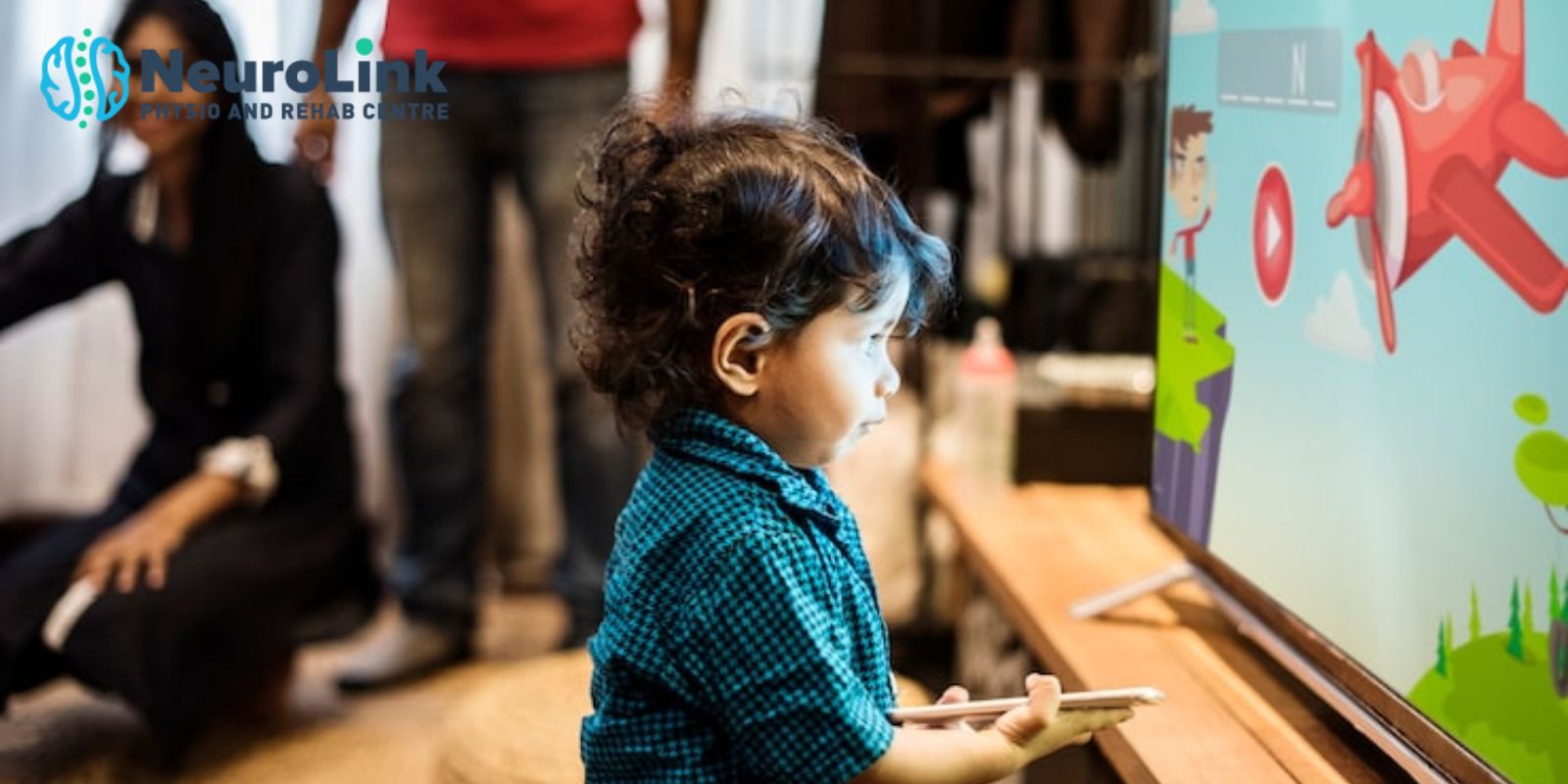
Every child learns at a different pace. Some can sit with homework for a long time, while others need movement, reminders, or extra help to finish. When difficulty with attention, focus, following instructions, or learning affects daily life, parents may become concerned. Finding support at a rehabilitation centre in gurugram can help families understand a child’s needs and plan practical next steps.
A child who loses focus is not necessarily lazy or unwilling to learn. Some children need help with attention and self-regulation; others may find reading, writing, communication, or classroom routines difficult. Observe the pattern, speak with the school and healthcare provider, and seek an appropriate assessment instead of blaming or comparing the child.
At NeuroLink Rehab Centre, families can enquire about child-development support and suitable next steps. The aim should be to understand each child’s strengths and challenges and build support around individual needs. A rehabilitation centre in gurugram should guide parents towards an assessment-led plan rather than a one-size-fits-all programme.
Why Do Some Children Struggle with Attention, Focus, and Learning?
Attention is the ability to direct the mind towards a task, stay with it for an appropriate period, and shift focus when needed. These skills develop gradually. Expectations should match the child’s age and developmental level.
A child may struggle because a task feels too difficult, instructions are unclear, the environment is distracting, or the child is tired or worried. Sometimes, attention difficulties may be connected with a developmental or learning condition. Getting distracted does not automatically mean a child has Attention-Deficit/Hyperactivity Disorder (ADHD).
Parents searching for a rehabilitation centre in gurugram should look for a setting that considers the whole child, not just marks or classroom behaviour. Communication, emotional regulation, social interaction, sleep, movement, and learning skills can all be relevant.
Common Signs Parents May Notice at Home or School
Every child gets distracted sometimes. A concern becomes more important when a pattern continues, appears in more than one setting, and affects everyday activities. Notice what happens over time rather than judging a single difficult day.
1. Difficulty staying with a task
The child may begin homework but leave it unfinished, move quickly between toys, or need reminders to return to an activity. A rehabilitation centre in gurugram can help explore whether the issue relates to attention, understanding, planning, or another developmental need.
2. Trouble following instructions
A child may understand one instruction but become confused by several actions in sequence. Check whether the child heard, understood, and remembered the instruction before assuming they are ignoring you.
3. Frequent forgetfulness
Some children misplace pencils, forget books, or struggle to organise a school bag. These difficulties may relate to planning, working memory, attention, or age-related development.
4. Reading, writing, or number difficulties
A child may avoid reading aloud, confuse letters, struggle to spell, write slowly, or find number concepts difficult. These patterns can sometimes be linked to learning difficulties, not low intelligence or lack of effort. Ask a rehabilitation centre in gurugram how concerns are assessed and whether specialist referrals are available.
5. Restlessness or impulsive behaviour
Some children leave their seats, interrupt conversations, answer too quickly, or find waiting difficult. Others may appear quiet but lose track of lessons. ADHD can involve inattentive symptoms, hyperactive-impulsive symptoms, or both, but diagnosis requires a qualified professional.
6. Frustration or low confidence
A child who finds schoolwork difficult may say, “I cannot do it,” become upset during homework, or avoid activities. This may reflect confusion, fatigue, fear of mistakes, or frustration. Emotional well-being deserves attention alongside academic progress.
What Could Be Behind These Challenges?
There is no single explanation for every attention or learning concern. Several factors may contribute at the same time. A rehabilitation centre in gurugram can help families understand which assessment or professional guidance may be relevant.
ADHD: ADHD can affect attention, activity levels, and impulse control. Symptoms must be persistent, inappropriate for the child’s developmental level, and present across settings. A checklist or online quiz cannot confirm it.
Specific learning difficulties: Dyslexia can affect reading and spelling, while dyscalculia can affect number skills. A child may be bright and creative but need specialised teaching strategies.
Language difficulties: Trouble understanding spoken language, expressing ideas, or processing instructions can make classroom learning challenging. A speech and language assessment may clarify whether support is needed.
Sleep, stress, and emotional health: Inadequate sleep, anxiety, changes at home, bullying, or school pressure can affect concentration.
Hearing or vision concerns: Difficulty hearing a teacher or seeing the board can look like inattention. A healthcare provider may recommend hearing or vision checks.
Developmental and sensory differences: Some children need support with sensory regulation, motor coordination, social communication, or daily routines.
A rehabilitation centre in gurugram should not assign a label based on one behaviour. A suitable approach considers development, routines, strengths, challenges, and experiences at home and school. When needed, the family should be guided towards a paediatrician, developmental specialist, child psychologist, or another qualified professional.
When Should Parents Seek Professional Guidance?
Seek guidance when attention or learning difficulties continue and make daily activities harder. Homework may take much longer than expected, teachers may regularly report difficulty staying on task, or the child may struggle to follow instructions or keep up despite support. Ask for help when frustration, withdrawal, or low confidence begins affecting relationships and well-being.
Do not wait for repeated failure before asking questions. Early guidance can help families understand the concern; it does not mean the child will automatically receive a diagnosis or need intensive therapy. A rehabilitation centre in gurugram may form part of the support plan after the child’s needs have been assessed.
If you are exploring a rehabilitation centre in gurugram, discuss your observations with the child’s paediatrician or another qualified healthcare professional. Share when the difficulty began, how often it occurs, and which situations make it easier or harder. Sudden changes in attention, behaviour, or learning should also be discussed with a healthcare professional.
What Should You Do First? A Practical Plan for Parents
Step 1: Observe without blaming
For a week or two, note when your child loses focus. Does it happen during reading, writing, group activities, or every task? Does the child focus better with short instructions or when an adult works nearby? Record examples rather than labels such as “lazy” or “naughty.”
Step 2: Speak with the teacher
Ask whether similar patterns appear in class, which activities are difficult, and what support has been tried. Teachers may notice patterns that are not visible at home, while parents can share information about routines and behaviour outside school.
Step 3: Arrange an appropriate evaluation
A healthcare professional may ask about developmental milestones, health, sleep, family history, school performance, and behaviour in different settings. Depending on the concern, the child may need medical review, hearing or vision checks, developmental screening, psychological assessment, or a specific learning evaluation.
ADHD assessment is not based on one blood test, scan, or single observation. Clinicians gather information from parents and teachers, consider how symptoms affect daily life, and check whether another condition could explain them. A rehabilitation centre in gurugram should complement this process, not replace a qualified diagnostic assessment.
Step 4: Ask what support is appropriate
The professional may recommend home strategies, school adjustments, therapy, specialist referral, or a combination. A rehabilitation centre in gurugram can be part of the support journey when its services match the child’s goals. Ask who will work with your child, what the intervention aims to improve, and how progress will be reviewed.
Step 5: Review progress
Agree on practical goals, such as following a two-step instruction, beginning homework with fewer reminders, or communicating a need. Review them with professionals and teachers. If the approach is not helping, discuss changes rather than assuming the child is not trying.
How Can a Rehabilitation Centre Support a Child’s Development?
A child-focused rehabilitation plan should be personalised, not a fixed package for every child. Intervention depends on age, abilities, assessment findings, family priorities, and any professional diagnosis or referral.
Occupational therapy
Occupational therapy may support everyday participation. Depending on the child, goals may include managing routines, improving fine-motor skills, using classroom tools, developing play skills, or practising regulation strategies. It is not simply about making a child sit still; it should build functional skills and independence. Ask the rehabilitation centre in gurugram how goals are selected and how parents can practise them at home.
Speech and language therapy
This may help when a child has difficulty understanding instructions, expressing thoughts, asking for help, or taking turns in conversation. Therapists may use play, stories, pictures, and structured activities suited to the child’s communication level. Speech therapy is most appropriate when assessment shows communication skills need support; it is not a direct treatment for every attention problem.
Behavioural support
Some children benefit from clear expectations, visual routines, step-by-step tasks, positive reinforcement, and learning to request a break or help. Support should be respectful and focused on useful skills rather than punishment or forced compliance. If Applied Behaviour Analysis (ABA) is considered, ask about goals, methods, professional qualifications, the child’s comfort, and progress monitoring. It is not a one-size-fits-all solution.
Special education and learning support
Children who struggle with reading, writing, spelling, or mathematics may need targeted educational support. A special educator can identify the skill that needs attention and use suitable teaching methods, such as shorter instructions, extra practice, visual prompts, or adjusted classroom expectations. A rehabilitation centre in gurugram may guide families, but parents should confirm branch-level services and whether an external learning assessment is needed.
Physiotherapy and developmental support
Children with motor, balance, posture, or coordination needs may benefit from paediatric physiotherapy after assessment. Therapy should match an identified need; it should not be added simply because a child has trouble concentrating.
Simple Ways to Support Attention and Learning at Home
Professional support is only one part of development. Everyday routines can make learning more manageable. Choose a few strategies and use them consistently.
Create a predictable routine. Keep regular times for waking, meals, homework, play, and sleep. A picture schedule can help younger children understand what comes next.
Break large tasks into steps. Instead of saying, “Finish all your homework,” begin with one action, such as opening the notebook or completing three questions.
Reduce distractions. Choose a quiet, well-lit homework area and keep only the required books and stationery nearby.
Use short work periods and movement breaks. A brief activity may be easier than a long study session. Adjust the length to the child’s age and needs.
Give positive feedback. Notice specific efforts, such as following two instructions or returning to a task. Avoid comparing siblings or classmates.
Read and play together. Stories, puzzles, matching games, blocks, and turn-taking games can support language, memory, planning, and attention.
Protect sleep and active time. Maintain a regular bedtime and encourage age-appropriate activity. Discuss ongoing sleep problems with a healthcare professional.
Parents visiting a rehabilitation centre in gurugram can ask the therapist to suggest two or three home activities that fit the family’s routine. A realistic plan used consistently is more useful than a long list of complicated exercises.
How Can Schools and Parents Work Together?
Children spend much of the day at school, so communication between teachers and parents matters. Share relevant assessment recommendations and ask what adjustments are practical. Depending on the child, these may include seating away from distractions, one instruction at a time, visual reminders, brief movement breaks, or dividing long assignments into smaller parts.
A child with reading or language difficulties may need instructions explained in more than one way. Another child may need extra time to organise materials. The aim is to make learning accessible while helping the child build skills.
Be specific: instead of saying, “My child cannot focus,” explain what happens during a worksheet or lesson. Ask the teacher what they observe and agree on one or two strategies. When choosing a rehabilitation centre in gurugram, ask whether therapy goals can be connected with classroom routines.
How to Choose the Right Rehabilitation Centre in Gurugram
Look beyond advertisements or promises of quick results. A suitable centre should explain its assessment process, staff qualifications, services at that branch, and how parents will be involved.
Before starting, ask:
- Who will assess my child, and what are their qualifications?
- Will the assessment consider home, school, communication, behaviour, and development?
- Which therapy or learning support is recommended, and why?
- What goals will be set, and how will progress be measured?
- How can parents support the child at home?
- Will the centre coordinate with the child’s doctor or school?
- What are the session frequency, review process, and fees?
Be cautious about providers who guarantee a cure or dramatic academic improvement in a fixed number of sessions. A good professional welcomes questions, explains limitations, respects the child’s comfort, and adjusts the plan when needed.
A reliable rehabilitation centre in gurugram should also recognise when a child needs care beyond the centre’s scope and guide the family towards a qualified professional.
How NeuroLink Rehab Centre Can Be Part of Your Child’s Support Journey
NeuroLink Rehab Centre has a Gurugram location at 388, near Medanta Hospital, Sector 39, Gurugram, Haryana. Its website describes the Gurgaon centre as providing physiotherapy, rehabilitation, and child-development support. It also lists child-development areas such as occupational therapy, speech therapy, behaviour (ABA) therapy, paediatric physiotherapy, and special education. Parents should confirm which child-focused services are currently available at the Gurugram branch and which professional is appropriate for their child’s concern.
If you are considering a rehabilitation centre in gurugram, explain whether the main concern is attention, communication, classroom participation, motor skills, emotional regulation, or academic learning. Ask how the team will assess the concern and whether therapy, educational support, or an external specialist referral is suitable.
The listed Gurugram address is 388, near Medanta Hospital, Sector 39, Gurugram, Haryana 122022. The listed contact number is 97 0303 0405. Contact the centre to confirm services and appointment availability before visiting.
📞 Contact Us: 97 0303 0405
🌐 Explore Our Services:
https://neurolinkrehab.com/services/
📱 Follow Us on Instagram:
https://www.instagram.com/neurolink.hyd
📘 Follow Us on Facebook:
https://www.facebook.com/neurolinkrehab
NeuroLink Rehab — Supporting Better Recovery, Mobility & Independence.