Occupational Therapy Centre in Gurgaon provides important rehabilitation support for people who have difficulty performing everyday activities due to an injury, illness, disability, developmental condition, or neurological problem. Occupational therapy helps individuals become more independent and confident in activities such as dressing, eating, writing, walking safely, working, studying, playing, and taking care of themselves.
Many people think occupational therapy is only for children or people recovering from major injuries. In reality, occupational therapists work with people of different ages and with many different health conditions. The main goal is simple: to help a person participate in the daily activities that are important to them. Occupational therapy may address physical abilities, thinking skills, sensory processing, coordination, routines, and changes needed at home, school, or work.
For families looking for an occupational therapy centre in Gurgaon, understanding which conditions can benefit from occupational therapy can make it easier to choose the right rehabilitation support. NeuroLink Rehab Centre provides rehabilitation-focused care designed around the individual needs, abilities, and goals of each person.
What Is Occupational Therapy?
Occupational therapy is a type of rehabilitation that focuses on helping people perform meaningful everyday activities. These activities can include personal care, household tasks, school activities, work, hobbies, social activities, and other routines.
The word “occupation” in occupational therapy does not only mean having a job. It refers to the activities people need, want, or are expected to do in their daily lives.
For example, occupational therapy may help a child learn to hold a pencil and write, help an adult use their hand after an injury, or help a stroke survivor become more independent while dressing and eating.
Occupational therapists first understand what a person is finding difficult. They then create activities and strategies that address those difficulties. In some cases, they may also recommend changes to the environment or assistive equipment to make daily activities safer and easier.
Why Is Occupational Therapy Important?
A health condition can affect much more than a person’s physical movement. It can also affect concentration, memory, coordination, confidence, sensory processing, communication, or the ability to manage daily routines.
For example, after a stroke, a person may have enough strength to sit or stand but still struggle to button a shirt, use a spoon, remember steps involved in cooking, or safely complete personal-care activities.
This is where occupational therapy becomes valuable.
An occupational therapist looks at the complete activity and identifies what is making it difficult. Treatment may then focus on improving the required skills, practising the activity in smaller steps, or finding a safer and easier way to complete it.
The overall aim is to improve independence and participation in everyday life rather than focusing only on one physical movement.
Common Conditions Treated with Occupational Therapy
Occupational therapy can support people with a wide range of conditions. Treatment always depends on the person’s age, symptoms, abilities, medical history, and personal goals.
Here are some common conditions where occupational therapy may be helpful.
1. Stroke
Stroke is one of the common conditions where occupational therapy can play an important role in rehabilitation.
A stroke can affect movement, balance, vision, coordination, memory, attention, and the ability to perform everyday activities. Some people may experience weakness or reduced control on one side of the body.
Occupational therapy after stroke may focus on activities such as:
- Dressing and grooming
- Eating and drinking
- Using the affected hand
- Moving safely during daily activities
- Improving coordination
- Practising household activities
- Improving memory and attention
- Learning alternative ways to complete tasks
Occupational therapists may use meaningful daily activities as part of rehabilitation. For example, a person may practise reaching, grasping, or hand control while performing a practical task.
Evidence-based occupational therapy resources specifically recognise the role of occupational therapy in helping stroke survivors improve everyday activity participation, movement, cognition, and vision-related difficulties.
If your family member is recovering after a stroke, an occupational therapy centre in Gurgaon can become an important part of a broader rehabilitation plan.
2. Cerebral Palsy
Cerebral palsy can affect movement, muscle control, coordination, posture, and daily functioning. The effect can be different for every child.
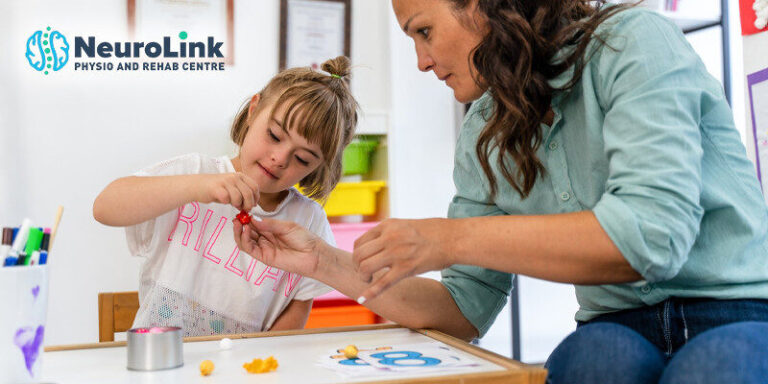
Occupational therapy can help children develop skills needed for greater independence. Depending on the child’s needs, therapy may include:
- Holding and using objects
- Feeding
- Dressing
- Handwriting
- Playing
- Using school materials
- Fine motor activities
- Hand-eye coordination
- Self-care skills
The therapist may also suggest ways to modify activities so that the child can participate more easily.
The focus is not simply on making every movement perfect. It is about helping the child use their abilities effectively in daily life.
3. Autism Spectrum Disorder
Children with autism may experience difficulties related to sensory processing, attention, coordination, self-care, play, communication, or daily routines.
Occupational therapy can help children participate more comfortably and successfully in everyday activities.
Depending on the child’s individual needs, therapy may focus on:
- Sensory processing
- Dressing
- Feeding routines
- Hand skills
- Playing
- School participation
- Attention during activities
- Following routines
- Fine motor development
- Independence in self-care
Modern occupational therapy approaches should be personalised and strengths-based, with attention to the child’s individual needs and environment.
Parents searching for an occupational therapy centre in Gurgaon for a child with autism should look for an approach that focuses on functional skills, participation, comfort, and the child’s individual strengths.
4. Developmental Delays in Children
Some children take longer than expected to develop certain skills. They may struggle with sitting, using their hands, playing, feeding, dressing, drawing, or participating in age-appropriate activities.
Occupational therapy can help identify areas where the child needs support and create activities that encourage skill development.
Treatment may include:
- Fine motor activities
- Hand strengthening
- Hand-eye coordination
- Play-based activities
- Self-care training
- Pre-writing activities
- Attention-building activities
- Sensory activities
- Functional independence training
The goal is to help children participate more confidently in activities at home, school, and other environments.
Occupational therapists working with children commonly look at self-care, play, school activities, developmental stage, attention, regulation, and the environment in which the activity takes place.
5. Sensory Processing Difficulties
Some children may react strongly to sounds, lights, touch, movement, textures, or other sensory experiences. Others may seek certain sensory experiences or have difficulty maintaining attention and regulation during activities.
These difficulties can affect school participation, play, eating, dressing, and social activities.
Occupational therapy may help families understand how sensory factors affect everyday activities and develop individualised strategies to support participation.
For example, therapy may work on helping a child tolerate certain textures, participate in classroom activities, manage transitions, or remain engaged in an appropriate activity.
Every child is different, so sensory-based intervention should be based on an individual assessment rather than using the same activities for every child.
6. Traumatic Brain Injury
A traumatic brain injury can affect physical movement as well as memory, attention, planning, problem-solving, behaviour, and daily functioning.
Even when a person appears physically better, they may still find everyday tasks difficult.
Occupational therapy may help with:
- Memory strategies
- Attention
- Planning
- Problem-solving
- Personal care
- Household activities
- Work-related activities
- Safety awareness
- Returning to routines
The therapist may break complex activities into smaller steps and gradually increase their difficulty.
Occupational therapy is recognised as part of rehabilitation for adults with neurological conditions including traumatic brain injury, multiple sclerosis, Parkinson’s disease, and stroke.
7. Parkinson’s Disease
Parkinson’s disease can cause movement difficulties, stiffness, tremors, slower movements, and changes that affect daily activities.
Occupational therapy can help a person find safer and more practical ways to complete everyday tasks.
Therapy may focus on:
- Dressing
- Eating
- Grooming
- Writing
- Household activities
- Movement during daily routines
- Energy management
- Safety
- Use of assistive equipment
An occupational therapist may also suggest ways to organise the home environment to make important activities easier and safer.
The goal is to help the person maintain independence for as long as possible.
8. Spinal Cord Injury
Spinal cord injuries can affect movement, sensation, strength, and independence. The impact depends on the location and severity of the injury.
Occupational therapy may help a person learn how to perform daily activities with their current abilities.
Treatment can include:
- Self-care training
- Dressing techniques
- Hand function
- Transfer skills
- Wheelchair-related activities
- Home modifications
- Assistive equipment
- Work and community participation
The therapist may teach alternative techniques when a person cannot perform an activity in the same way as before the injury.
This approach can help the individual regain confidence and participate more actively in everyday life.
9. Arthritis and Other Joint Conditions
Arthritis can cause pain, stiffness, weakness, and difficulty using the hands or other joints.
Simple tasks such as opening a jar, writing, cooking, dressing, or using a phone may become uncomfortable.
Occupational therapy may help people learn joint-protection techniques, activity modification strategies, and safer ways to perform daily activities.
The therapist may also recommend appropriate assistive devices when necessary.
Occupational therapy has an established role in supporting people with osteoarthritis and rheumatoid arthritis, particularly when these conditions affect daily activities and participation.
10. Hand and Upper-Limb Injuries
Injuries involving the hand, wrist, arm, or fingers can affect a person’s ability to work and perform everyday tasks.
Occupational therapy may be useful after certain injuries or surgeries as part of the rehabilitation plan recommended by the treating healthcare team.
Therapy can focus on:
- Hand movement
- Grip
- Coordination
- Fine motor skills
- Functional use of the affected hand
- Returning to daily activities
- Work-related tasks
Instead of practising movement alone, the therapist may use meaningful tasks that require the person to use the hand in a practical way.
For someone who has difficulty using one hand, occupational therapists can also teach alternative techniques and ways to adapt daily tasks.
11. Learning and Attention Difficulties
Some children may struggle with handwriting, classroom activities, attention, organisation, or completing tasks.
Occupational therapy can support functional school skills by working on areas such as:
- Pencil control
- Handwriting
- Fine motor skills
- Cutting with scissors
- Attention
- Task organisation
- Sitting and participating in activities
- Visual-motor coordination
The objective is to help the child participate more effectively in school and daily routines.
12. Dementia and Age-Related Functional Difficulties
Older adults may experience changes in memory, movement, vision, balance, or daily functioning.
Occupational therapy can help maintain independence and safety by adapting activities and environments.
For example, an occupational therapist may suggest ways to simplify routines, organise frequently used objects, improve home safety, or support participation in meaningful activities.
Occupational therapy can also help families understand how changes in ability may affect everyday activities.
13. Multiple Sclerosis
Multiple sclerosis can cause fatigue, weakness, balance problems, coordination difficulties, and changes in daily functioning.
Occupational therapy may help people manage these difficulties while continuing important activities.
Treatment may include:
- Energy conservation
- Activity planning
- Self-care strategies
- Hand function
- Home adaptations
- Work-related strategies
- Assistive equipment
The focus is often on finding practical ways to manage symptoms and maintain participation in daily life.
14. Burns and Physical Injuries
Burns and other injuries can affect movement, strength, sensation, and the ability to use a particular body part.
Occupational therapy may be included in rehabilitation to help restore functional skills and support a return to daily activities.
The exact treatment depends on the injury and the recommendations of the medical team.
What Does an Occupational Therapy Session Include?
An occupational therapy session is not the same for everyone.
The therapist first evaluates the person’s difficulties and identifies the activities that matter most to them.
For example, one person’s main goal may be dressing independently, while another person’s goal may be writing at school or returning to work.
Treatment may include:
Functional Activities
The therapist may use real-life activities such as dressing, eating, writing, cooking, or handling objects as part of rehabilitation.
Fine Motor Exercises
These activities can improve finger control, hand coordination, and the ability to manipulate small objects.
Cognitive Activities
For people with cognitive difficulties, therapy may include activities that support memory, attention, planning, and problem-solving.
Sensory Activities
For children with sensory processing difficulties, the therapist may use carefully selected activities based on individual needs.
Adaptive Techniques
Sometimes the easiest way to become more independent is to learn a different way of performing an activity.
Assistive Equipment
Depending on the person’s needs, an occupational therapist may recommend equipment that makes daily activities safer or easier.
Home and Environmental Changes
Occupational therapists can also consider the environment where activities happen. Changes at home, school, or work may improve safety and participation.
How NeuroLink Rehab Centre Can Help
Choosing the right rehabilitation centre can make the therapy experience more structured and personalised.
NeuroLink Rehab Centre focuses on rehabilitation support for individuals who need help improving functional abilities and independence. Occupational therapy can be particularly valuable when a person’s condition affects everyday tasks rather than only physical movement.
At NeuroLink Rehab Centre, therapy goals can be based around the individual’s specific needs and daily routine. Instead of focusing on the same exercises for everyone, rehabilitation should consider what the person needs to achieve at home, school, work, or in the community.
If you are searching for an occupational therapy centre in Gurgaon, it is important to understand that therapy is not simply about performing exercises. The bigger objective is to help the individual use their abilities in meaningful everyday situations.
When Should You Consider Occupational Therapy?
You may consider an occupational therapy evaluation if a child or adult is having ongoing difficulty with everyday activities.
Some signs include:
- Difficulty dressing independently
- Trouble eating or using utensils
- Difficulty writing or holding a pencil
- Problems using one hand
- Difficulty with fine motor activities
- Trouble following daily routines
- Sensory difficulties
- Reduced independence after stroke
- Difficulty managing activities after an injury
- Problems returning to school or work
- Difficulty with memory or planning
- Challenges with daily activities due to a neurological condition
You do not always need to wait until a problem becomes severe. Early assessment can help identify functional difficulties and determine whether occupational therapy may be appropriate.
However, the need for therapy should be decided after an appropriate professional assessment, particularly when symptoms are new, severe, or related to a medical condition.
Benefits of Occupational Therapy
Occupational therapy can provide several practical benefits depending on the individual’s condition and goals.
Greater Independence
One of the main goals is to help people perform more daily activities on their own.
Better Participation
Therapy can help children participate in school and play, while adults may work toward participation in household, social, or work activities.
Improved Functional Skills
Therapy can target hand use, coordination, cognition, sensory processing, and other skills needed for daily activities.
Increased Confidence
Being able to complete an activity independently can improve confidence and motivation.
Safer Daily Activities
Occupational therapists can identify barriers and suggest safer techniques or environmental changes.
Better Quality of Life
When people can participate in meaningful activities, it can support overall well-being and quality of life. Occupational therapy commonly focuses on practical participation in everyday activities rather than treating a condition in isolation.
Choosing an Occupational Therapy Centre in Gurgaon
When looking for an occupational therapy centre in Gurgaon, consider a centre that provides individualised assessment and rehabilitation planning.
Some important things to consider include:
- Experience with the person’s specific condition
- Qualified rehabilitation professionals
- Individualised therapy goals
- Child and adult rehabilitation options, when required
- Family involvement
- Regular progress assessment
- Focus on practical daily activities
- Communication between different rehabilitation professionals
- A comfortable and supportive environment
It is also helpful to ask how the therapist plans to measure progress. Good rehabilitation should connect therapy activities with real-life goals.
For example, instead of simply saying “improve hand strength,” a functional goal may be “use a spoon independently during meals.” Instead of only “improve fine motor skills,” the goal might be “hold a pencil and participate in classroom writing.”
This makes therapy more meaningful for both the individual and the family.
Frequently Asked Questions
What conditions can occupational therapy treat?
Occupational therapy can support people with many conditions, including stroke, cerebral palsy, autism, developmental delays, traumatic brain injury, Parkinson’s disease, spinal cord injury, arthritis, hand injuries, multiple sclerosis, sensory processing difficulties, and age-related functional problems. The exact therapy depends on the individual’s assessment and goals.
Is occupational therapy only for children?
No. Occupational therapy can benefit children, adults, and older adults. It can support people with neurological conditions, injuries, physical disabilities, developmental difficulties, cognitive changes, and challenges with everyday activities.
How can occupational therapy help after a stroke?
Occupational therapy may help stroke survivors practise everyday activities such as dressing, eating, grooming, using their hands, and completing household tasks. It may also address cognitive, movement, and visual difficulties that affect daily participation.
Can occupational therapy help children with autism?
Yes. Occupational therapy may support children with autism when difficulties affect daily activities, sensory processing, self-care, play, school participation, or routines. Treatment should be individualised according to the child’s needs and strengths.
What is the main goal of occupational therapy?
The main goal is to help a person participate more independently and safely in meaningful everyday activities. These may include self-care, school, work, household activities, hobbies, and social participation.
How long does occupational therapy take?
The duration varies from person to person. It depends on the condition, severity of difficulties, age, goals, progress, and recommended treatment plan. A therapist can provide a more appropriate estimate after assessment.
How do I find an occupational therapy centre in Gurgaon?
When searching for an occupational therapy centre in Gurgaon, look for a rehabilitation centre with qualified professionals, individualised treatment plans, appropriate experience, and a focus on practical daily-life goals. NeuroLink Rehab Centre can be considered by families looking for rehabilitation-focused occupational therapy support in Gurgaon.
For More Information Visit us on :-
https://www.instagram.com/neurolink.hyd
https://www.facebook.com/neurolinkrehab
Contact us on :- 97 0303 0405