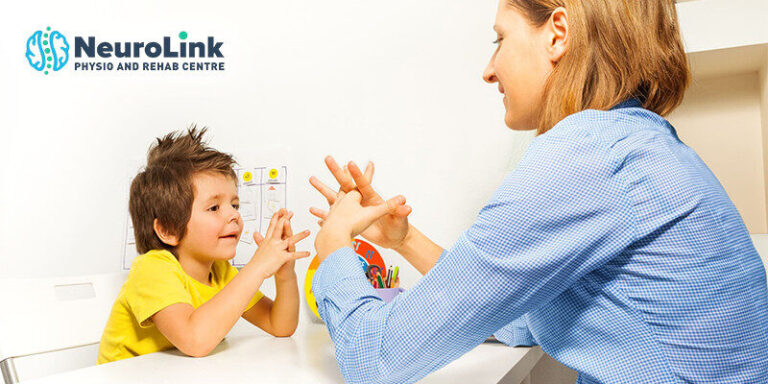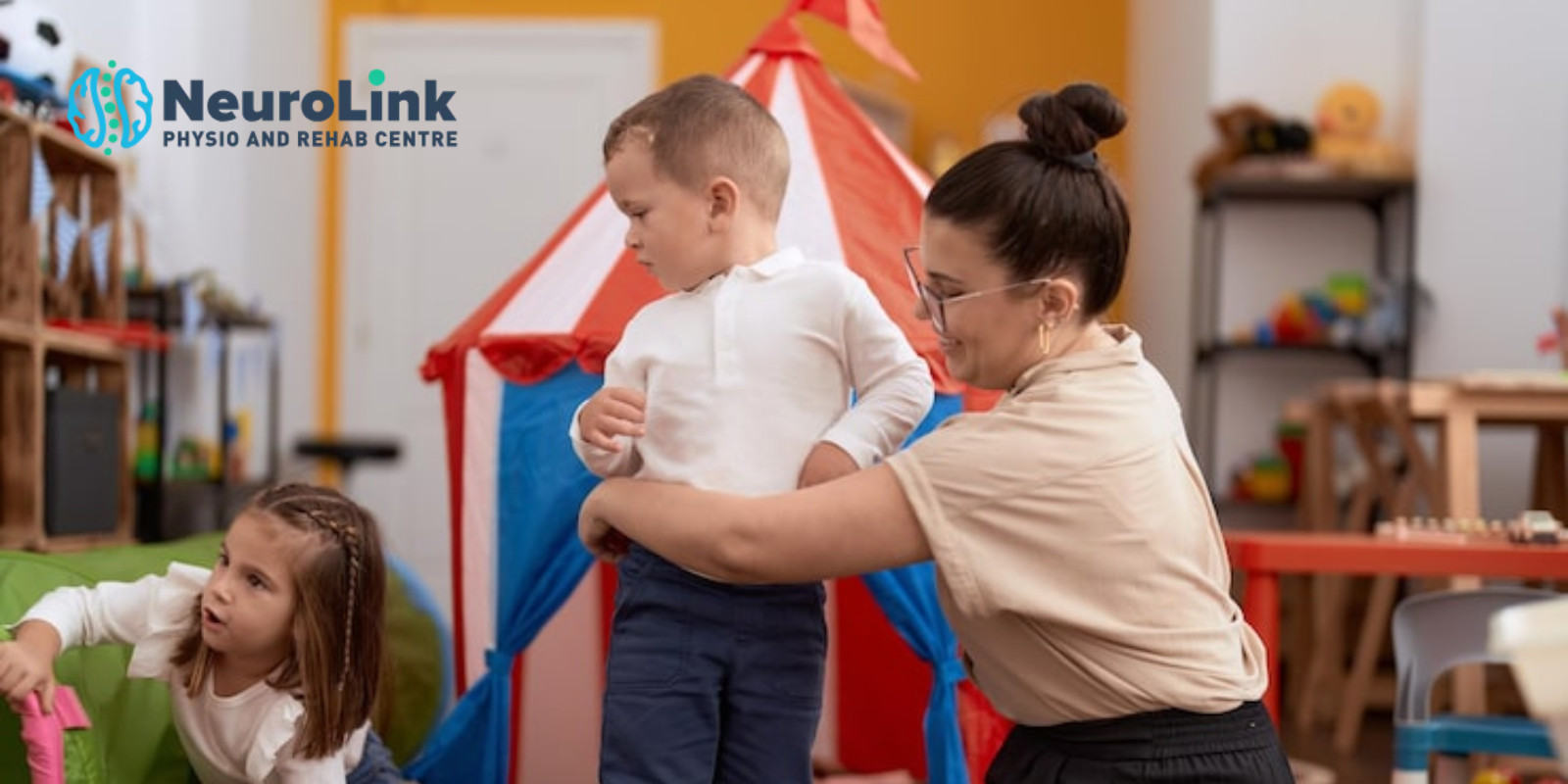
A child who struggles to speak, walk, follow instructions, interact with others, or perform daily activities may need extra developmental support. A Rehabilitation Centre in Gurugram can help parents understand these challenges and explore suitable therapy options. When developmental difficulties are identified early, appropriate intervention can help children develop essential skills and participate more comfortably in everyday life. Parents who notice these signs should seek professional guidance rather than waiting for the child to catch up without support.
Choosing the right Rehabilitation Centre in Gurugram can help parents understand their child’s developmental needs and find suitable treatment. At NeuroLink Rehab Centre, families can explore rehabilitation support for children who need help with communication, movement, learning, behaviour, and daily living skills.
Early intervention focuses on identifying a child’s difficulties and starting suitable therapy as soon as possible. The treatment plan depends on the child’s age, abilities, assessment findings, and individual goals. Early support can help children develop useful skills while giving parents practical ways to continue learning activities at home.
What Is Early Intervention for Children with Developmental Challenges?
Early intervention means providing specialised support to young children who show developmental delays or need additional help with specific skills. It focuses on improving the abilities a child uses at home, in school, during play, and while interacting with family members.
A child may experience difficulties in one or more areas, including:
- Speech and communication: Difficulty saying words, understanding instructions, or expressing needs.
- Physical development: Difficulty sitting, standing, walking, balancing, or coordinating movements.
- Fine motor skills: Difficulty holding a pencil, picking up small objects, or using both hands together.
- Social interaction: Difficulty responding to others, sharing attention, or engaging in play.
- Daily living skills: Difficulty eating independently, dressing, using utensils, or following everyday routines.
- Learning and attention: Difficulty following simple directions, completing activities, or developing age-appropriate learning skills.
These signs do not automatically mean that a child has a developmental disorder. However, they may indicate a need for professional assessment.
A specialised Rehabilitation Centre in Gurugram can help families understand which skills need support and whether speech therapy, occupational therapy, physiotherapy, behavioural support, or other services may be appropriate.
Why Is Early Intervention Important for Child Development?
Parents sometimes believe that a child will overcome developmental difficulties with age. Although children develop at different rates, persistent difficulties should not be ignored.
Early assessment helps identify the areas where a child needs assistance. It also allows therapists and healthcare professionals to recommend suitable activities and treatment goals before difficulties create additional barriers to communication, learning, movement, or independence.
Here is how early intervention can help.
1. Helps Children Develop Speech and Communication Skills
A child who speaks fewer words than expected, struggles to understand simple instructions, or finds it difficult to communicate basic needs may benefit from a speech and language assessment.
Speech therapy can help children practise understanding language, using words, building sentences, improving communication, and developing appropriate ways to express their needs.
For example, if a child points or cries instead of communicating a need, a therapist may use pictures, gestures, play activities, and age-appropriate language exercises to encourage communication.
Parents can support these skills by naming familiar objects, reading picture books, describing daily activities, and giving the child time to respond.
When families approach a Rehabilitation Centre in Gurugram for speech-related concerns, they should ask how the treatment plan will address the child’s specific communication difficulties and how progress will be measured.
2. Improves Movement, Balance, and Physical Coordination
Some children experience delays in sitting, crawling, standing, walking, or developing balance and coordination. Others may have difficulty with movement because of neurological conditions, muscle weakness, or problems affecting motor control.
Paediatric physiotherapy may help improve strength, balance, posture, coordination, and functional movement, depending on the child’s condition.
Treatment activities may include:
- Practising sitting and standing with suitable support.
- Improving balance through supervised movement activities.
- Developing coordination through age-appropriate exercises.
- Practising walking and other functional movements when appropriate.
- Helping children participate more confidently in play and daily activities.
For example, a child who struggles to maintain balance may benefit from a therapist-led programme that gradually develops stability and controlled movement.
At NeuroLink Rehab Centre, parents can discuss their child’s movement difficulties and ask about appropriate rehabilitation options. A qualified professional should assess the child before recommending specific exercises or treatment.
3. Develops Fine Motor Skills and Independence
Fine motor skills help children use their hands and fingers for activities such as holding a spoon, turning book pages, drawing, stacking blocks, and fastening buttons.
When these skills are difficult, everyday activities can become frustrating for both the child and the family.
Occupational therapy may help children develop hand coordination, visual-motor skills, body awareness, and the ability to complete age-appropriate daily activities.
Depending on the assessment, therapy activities may include:
- Picking up and sorting small, safe objects.
- Practising age-appropriate drawing and colouring.
- Using child-friendly tools and utensils.
- Developing skills needed for dressing and feeding.
- Practising everyday tasks in smaller, manageable steps.
The aim is to help the child participate more independently in daily life rather than simply complete exercises during therapy sessions.
A suitable Rehabilitation Centre in Gurugram should help parents understand how therapy goals connect with the activities their child finds difficult at home or school.
4. Supports Social Interaction and Behavioural Skills
Some children find it difficult to respond to their name, take turns during play, communicate with other children, manage changes in routine, or express frustration.
These difficulties can have different causes. A proper assessment is important to understand the child’s needs rather than assuming that every behavioural concern has the same explanation.
Depending on the assessment, support may include structured play, communication activities, parent coaching, behavioural interventions, or other developmental therapies.
Parents can also encourage social learning by playing simple turn-taking games, using clear instructions, maintaining predictable routines, and praising meaningful attempts to communicate.
For children with autism or other developmental conditions, an individualised intervention plan can focus on functional communication, social participation, emotional regulation, and everyday independence.
At NeuroLink Rehab Centre, families should discuss the child’s particular challenges with qualified professionals to determine which interventions are suitable.
Which Therapies May Help Children with Developmental Delays?
The right treatment depends on the child’s difficulties and assessment results. Not every child requires every type of therapy, and treatment should be adjusted as the child develops new skills.
Speech and Language Therapy
Speech therapy may help children who struggle to understand language, express their needs, pronounce words, form sentences, or communicate during social interactions.
Treatment goal: Improve functional communication so the child can express needs, understand others, and participate more effectively in daily activities.
Occupational Therapy
Occupational therapy may help children who struggle with fine motor coordination, self-care, sensory processing, or everyday tasks.
Treatment goal: Improve participation in activities such as feeding, dressing, drawing, playing, and completing age-appropriate routines.
Paediatric Physiotherapy
Physiotherapy may support children with difficulties involving strength, posture, balance, mobility, and motor development.
Treatment goal: Improve functional movement and help the child participate more comfortably in play and daily activities.
Behavioural Therapy and Developmental Support
When appropriate, structured behavioural and developmental interventions can help children practise communication, following routines, learning through play, and managing everyday situations.
Treatment goal: Build useful skills through individualised, measurable, and developmentally appropriate activities.
Special Education and School Readiness Support
Some children need additional help with attention, early learning, classroom routines, following instructions, and preparing for school.
Treatment goal: Develop foundational learning and participation skills suited to the child’s abilities and educational needs.
Families looking for a Rehabilitation Centre in Gurugram should ask which services are available, which professionals provide them, and how the team coordinates care when a child needs support in more than one developmental area.
How Can Parents Recognise the Need for Early Intervention?
Developmental concerns can appear in different ways. Parents should pay attention to how their child communicates, moves, plays, learns, and manages daily activities over time.
Consider seeking professional advice if your child:
- Is not reaching expected communication or movement milestones.
- Has difficulty understanding simple, age-appropriate instructions.
- Struggles to use gestures, words, or other ways to express needs.
- Finds it difficult to use their hands for everyday activities.
- Has persistent challenges with social interaction or play.
- Needs much more support than expected for daily living tasks.
- Loses a skill they previously had, such as speaking, walking, or responding to familiar people.
A missed milestone does not confirm a diagnosis. However, it is a reason to discuss the concern with a paediatrician or qualified developmental professional. Losing previously acquired skills requires prompt medical assessment.
Parents do not need to wait for a formal diagnosis before asking for advice about developmental screening and suitable support. Early evaluation can help identify the next steps. (Source: CDC developmental monitoring and early intervention guidance.)
Step-by-Step Guide: What Should Parents Do If They Notice a Developmental Delay?
Finding the right treatment can feel confusing when parents are unsure which professional to approach. Following a clear process can make it easier to understand the child’s needs and choose suitable support.
Step 1: Record the Difficulties You Notice
Write down the activities your child finds difficult. For example, note whether your child struggles to communicate basic needs, follow instructions, hold objects, walk steadily, or interact during play.
Include examples from home, school, and other daily settings. These observations can help professionals understand the concerns more clearly.
Step 2: Arrange a Developmental Assessment
Consult a paediatrician or an appropriately qualified developmental professional. The assessment may examine communication, movement, learning, behaviour, social interaction, and daily living skills.
Depending on the findings, hearing or vision checks, additional evaluations, or specialist referrals may also be recommended.
Step 3: Choose the Right Therapy
After the assessment, discuss which interventions are appropriate for your child. A child with communication difficulties may need speech therapy, while a child with movement or self-care difficulties may benefit from physiotherapy or occupational therapy.
Some children require support from more than one professional. Treatment should follow the child’s assessed needs rather than a fixed package of therapies.
Step 4: Set Clear and Achievable Goals
Ask the therapist to establish specific goals, such as requesting a preferred object, following a simple instruction, improving balance, holding a spoon, or participating in a short play activity.
Clear goals make it easier to review progress and identify areas that need further attention.
Step 5: Practise Recommended Activities at Home
Children often need opportunities to practise skills outside therapy sessions. Parents can follow the therapist’s guidance by including simple activities in everyday routines.
For example, practise naming familiar objects during meals, encourage age-appropriate self-feeding, read together, or play simple turn-taking games.
Activities should suit the child’s abilities and safety needs. Parents should avoid forcing tasks that cause pain, distress, or physical discomfort.
Step 6: Review Progress Regularly
Development takes time, and progress may differ from one child to another. Regular reviews help the therapy team understand which strategies are working and whether treatment goals need to change.
A reliable Rehabilitation Centre in Gurugram should encourage communication between parents and therapists so that the child’s progress can be reviewed using meaningful functional goals.
How NeuroLink Rehab Centre Can Help Families Seeking Developmental Support
When parents are concerned about their child’s development, they need clear guidance on assessment, suitable therapies, and practical next steps.
NeuroLink Rehab Centre provides a point of contact for families exploring rehabilitation services for children with developmental and functional difficulties. Parents can discuss their child’s needs and enquire about appropriate therapy options, including speech therapy, occupational therapy, physiotherapy, and other developmental support where available.
Before beginning treatment, families should confirm the specific paediatric services offered at the centre, the qualifications of the professionals providing them, and whether the recommended intervention matches the child’s assessment findings.
If you are searching for a Rehabilitation Centre in Gurugram, consider asking these questions before choosing a provider:
- Do you assess the child’s individual developmental needs before recommending treatment?
- Which therapies are suitable for the child’s specific difficulties?
- How will the therapist measure and communicate progress?
- What activities can parents safely practise at home?
- How often will the treatment plan be reviewed?
- Will the team coordinate with the child’s paediatrician, school, or other therapists when needed?
These questions can help parents make informed decisions and understand what to expect from a rehabilitation programme.
Frequently Asked Questions About Rehabilitation Centre in Gurugram
1. Which Is the Right Rehabilitation Centre in Gurugram for Children with Developmental Delays?
Choosing the right Rehabilitation Centre in Gurugram depends on your child’s developmental needs, therapy requirements, and individual goals. NeuroLink Rehab Centre can be contacted to enquire about available rehabilitation services, assessment procedures, and suitable therapy options for children who need developmental support.
2. How Can a Rehabilitation Centre in Gurugram Help Children with Developmental Challenges?
A Rehabilitation Centre in Gurugram can help children work towards improving communication, movement, coordination, social interaction, and daily living skills through appropriate therapy. NeuroLink Rehab Centre can guide parents on available services and the next steps based on their child’s individual needs.
3. When Should Parents Visit a Rehabilitation Centre in Gurugram for Speech Delay?
Parents should seek professional advice if their child has difficulty expressing needs, understanding language, or reaching expected communication milestones. Visiting a Rehabilitation Centre in Gurugram, such as NeuroLink Rehab Centre, to enquire about suitable support can help parents understand the available options. A qualified professional should assess the child’s communication difficulties before recommending therapy.
4. Can Early Intervention at a Rehabilitation Centre in Gurugram Improve Child Development?
Early intervention can help children practise important developmental skills and address specific difficulties through individualised support. At NeuroLink Rehab Centre, parents can enquire about appropriate rehabilitation options. The benefits depend on the child’s needs, the type of intervention, and consistent participation in recommended activities.
5. What Therapies Should I Look for in a Rehabilitation Centre in Gurugram?
The appropriate therapies depend on the child’s assessment. Speech therapy may support communication, occupational therapy may address daily living and fine motor skills, and physiotherapy may help with movement and balance. When contacting NeuroLink Rehab Centre, ask which paediatric services are available and whether they suit your child’s developmental requirements.
6. How Do I Know If My Child Needs a Rehabilitation Centre in Gurugram?
Your child may need a developmental assessment if they experience persistent difficulties with speech, movement, coordination, social interaction, learning, or everyday activities. A Rehabilitation Centre in Gurugram, such as NeuroLink Rehab Centre, can be contacted to discuss available services. Consult a paediatrician or qualified developmental professional to determine the appropriate next step.
7. Can a Rehabilitation Centre in Gurugram Help Children with Autism?
Children with autism may benefit from individualised support for communication, social participation, daily living skills, and other developmental needs. NeuroLink Rehab Centre can be contacted to confirm which relevant services are available. Treatment should be tailored to the child’s strengths, support needs, and professional assessment.
8. How Can Parents Support Therapy After Visiting a Rehabilitation Centre in Gurugram?
Parents can support progress by practising therapist-recommended activities during play, meals, reading, and everyday routines. NeuroLink Rehab Centre can be asked about home activities that complement the child’s treatment plan. Regular communication with therapists helps parents understand progress and adjust activities safely.
9. Does Every Child Need Multiple Therapies at a Rehabilitation Centre in Gurugram?
No. Some children need support in one developmental area, while others may benefit from more than one therapy. NeuroLink Rehab Centre can be contacted to enquire about assessment and available services. The final treatment plan should be based on the child’s individual needs rather than a standard package.
10. How Can I Choose the Best Rehabilitation Centre in Gurugram for My Child?
Before selecting a Rehabilitation Centre in Gurugram, check the qualifications of the professionals, available paediatric services, individual treatment planning, progress reviews, and parent involvement. Contact NeuroLink Rehab Centre to confirm its services and discuss your child’s needs before beginning a rehabilitation programme.
📞 Contact Us: 97 0303 0405
🌐 Explore Our Services:
https://neurolinkrehab.com/services/
📱 Follow Us on Instagram:
https://www.instagram.com/neurolink.hyd
📘 Follow Us on Facebook:
https://www.facebook.com/neurolinkrehab
NeuroLink Rehab — Supporting Better Recovery, Mobility & Independence.