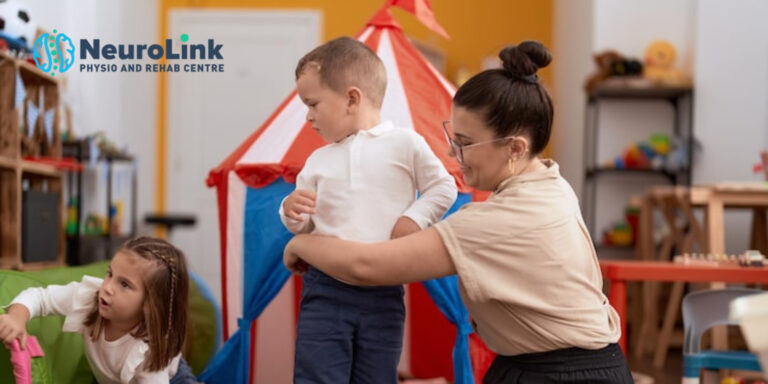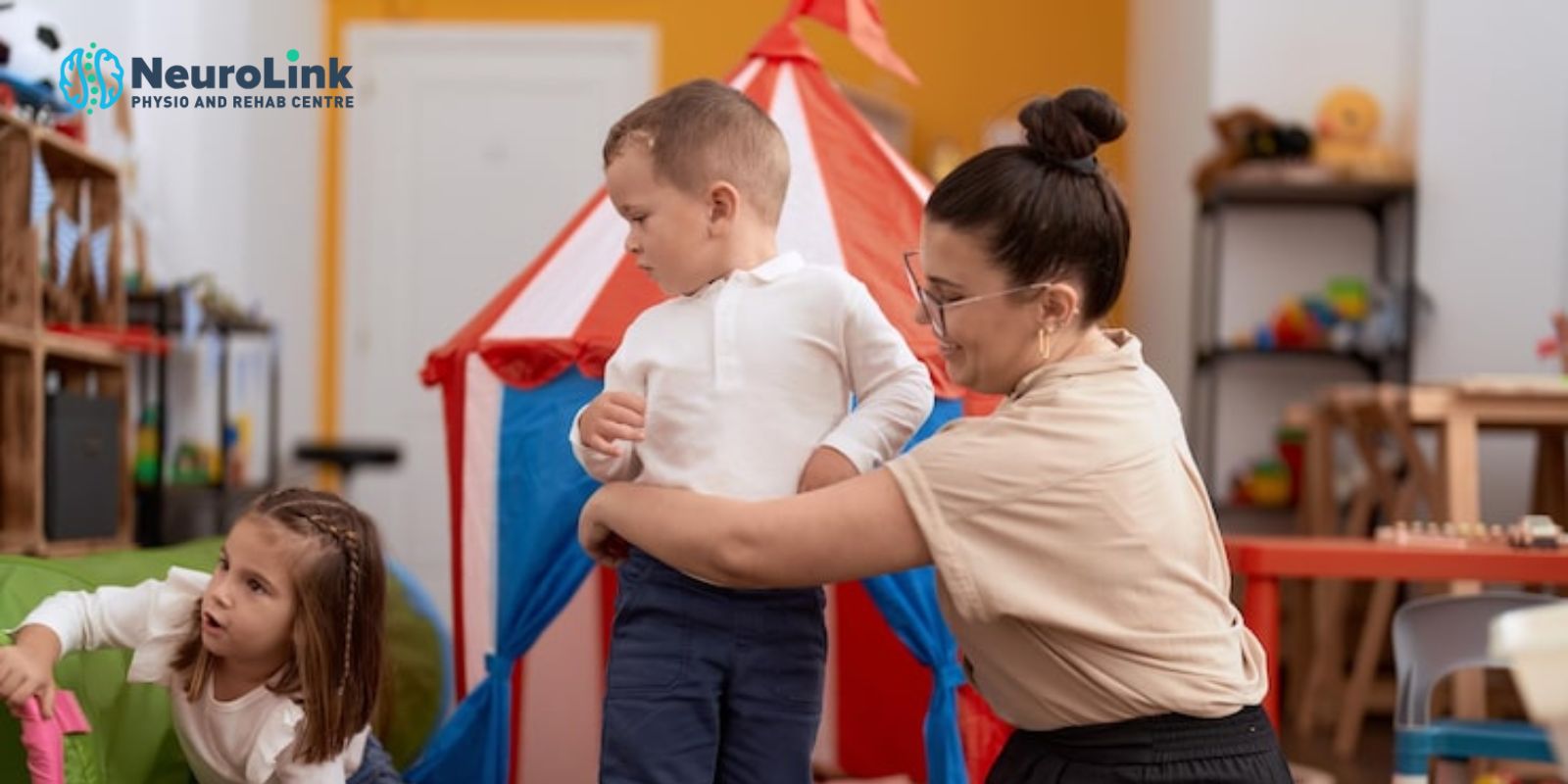
Every child learns and grows at their own pace. Some children easily learn to eat, dress, play, and communicate with others, while others need extra support to develop these everyday skills. For parents, even small challenges in a child’s daily routine can sometimes become a concern. Choosing the right Rehabilitation Centre in Gurugram can help parents understand their child’s developmental needs and explore suitable support for building everyday skills.
Occupational therapy can help children become more independent and confident in their everyday activities. If your child finds it difficult to complete daily tasks, visiting a Rehabilitation Centre in Gurugram can be a helpful step towards understanding their needs and finding the right support.
At NeuroLink Rehab Centre, children receive support through structured rehabilitation activities designed to improve their everyday functioning, independence, and participation in daily life.
What Is Occupational Therapy for Children?
Occupational therapy is a specialised therapy that helps children learn and improve the skills they need for everyday life.
The word “occupation” does not only refer to a job. For children, occupations include activities such as eating, dressing, playing, writing, brushing teeth, and participating in school activities.
At a trusted Rehabilitation Centre in Gurugram, occupational therapy focuses on helping children participate more comfortably in these daily activities.
Occupational therapists understand that every child has different strengths and challenges. They use age-appropriate activities, games, and exercises to help children develop skills step by step.
At NeuroLink Rehab Centre, occupational therapy can help children work towards greater independence while making learning enjoyable and meaningful.
Why Do Some Children Need Occupational Therapy?
Children may experience difficulties with everyday activities for different reasons. Some children may struggle with coordination, while others may find it difficult to concentrate, follow instructions, or manage sensory experiences.
Parents may consider visiting a Rehabilitation Centre in Gurugram if their child experiences difficulties such as:
- Difficulty holding a pencil or using scissors.
- Trouble buttoning clothes or wearing shoes.
- Challenges with eating independently.
- Difficulty maintaining attention during activities.
- Problems with hand-eye coordination.
- Sensitivity to sounds, textures, or certain movements.
- Difficulty participating in play or school activities.
- Challenges with balance and body coordination.
These difficulties do not mean that a child cannot learn these skills. With suitable guidance, practice, and support, children may gradually improve their ability to participate in everyday activities.
A professional assessment at NeuroLink Rehab Centre can help identify the areas where a child may benefit from occupational therapy.
How Occupational Therapy Helps Children Develop Everyday Skills
Occupational therapy focuses on practical skills that children use every day. A Rehabilitation Centre in Gurugram can provide structured activities that help children learn these skills in a supportive environment.
Let’s understand how occupational therapy can support different areas of a child’s development.
1. Improving Self-Care and Personal Hygiene Skills
Self-care is an important part of growing up. Activities such as brushing teeth, washing hands, eating, and getting dressed help children become more independent.
Some children may need additional guidance to complete these tasks.
Occupational therapy helps children practise self-care activities through simple instructions, demonstrations, and repeated practice.
At NeuroLink Rehab Centre, therapists may work on activities such as:
- Learning to wear and remove clothes.
- Practising buttoning and zipping.
- Holding a spoon and eating independently.
- Brushing teeth and washing hands.
- Putting on shoes and socks.
A Rehabilitation Centre in Gurugram can help children practise these activities according to their individual abilities.
The goal is to help children feel more comfortable completing daily routines and gradually reduce their dependence on others.
2. Developing Fine Motor Skills
Fine motor skills involve the small movements of the hands and fingers. These skills are essential for writing, drawing, eating, and handling small objects.
Children who struggle with fine motor skills may find it difficult to hold a pencil, turn pages, or use classroom materials.
Occupational therapy uses enjoyable activities to improve hand strength, finger control, and coordination.
Some common activities include:
- Playing with clay or dough.
- Picking up small objects.
- Drawing and colouring.
- Building blocks and puzzles.
- Using child-friendly scissors.
- Practising pencil grip.
At a Rehabilitation Centre in Gurugram, these activities can help children develop better control over their hand movements.
NeuroLink Rehab Centre focuses on helping children practise meaningful skills that support their participation in school and everyday life.
3. Supporting Sensory Processing
Children experience the world through their senses. They respond to sounds, lights, textures, movement, smells, and touch.
Some children may become uncomfortable with loud sounds, certain clothing textures, or crowded environments. Others may seek additional movement or sensory experiences.
These differences can sometimes affect a child’s ability to participate in daily routines.
Occupational therapy can help children understand and manage sensory experiences through activities selected according to their needs.
A professional Rehabilitation Centre in Gurugram can assess how sensory challenges affect a child’s daily activities and recommend appropriate strategies.
At NeuroLink Rehab Centre, sensory-based activities may be included in therapy when they are suitable for the child’s individual goals.
The aim is to support children in participating more comfortably in activities at home, school, and other familiar environments.
4. Improving Hand-Eye Coordination and Body Movement
Hand-eye coordination helps children use their hands accurately while looking at an object.
It is important for activities such as catching a ball, drawing, eating, playing games, and completing schoolwork.
Some children may struggle with these activities because of difficulties with coordination or motor planning.
Occupational therapy may include activities such as:
- Throwing and catching soft balls.
- Completing puzzles.
- Building towers with blocks.
- Playing with different toys.
- Following movement-based games.
- Practising activities that involve both hands.
A Rehabilitation Centre in Gurugram can provide structured opportunities for children to practise these skills.
At NeuroLink Rehab Centre, therapists can select activities based on a child’s developmental needs and ability to participate.
5. Helping Children Become More Independent at School
School activities require children to use several skills together. They need to hold pencils, manage books, sit comfortably, follow instructions, and participate in classroom routines.
Children who experience difficulties with these activities may find schoolwork challenging.
Occupational therapy can help children practise skills that support classroom participation.
For example, therapy may focus on:
- Improving pencil control.
- Practising handwriting-related movements.
- Managing school materials.
- Developing attention during activities.
- Following simple instructions.
- Improving sitting posture and coordination.
Choosing a suitable Rehabilitation Centre in Gurugram can help parents understand how occupational therapy may support their child’s school participation.
NeuroLink Rehab Centre aims to help children develop practical abilities that can support learning and everyday classroom activities.
6. Encouraging Social Interaction and Play Skills
Play is an important part of childhood development. Through play, children learn how to communicate, share, follow rules, and interact with others.
Some children may find it difficult to participate in group activities or understand how to play with other children.
Occupational therapy can include play-based activities that encourage participation, communication, and interaction.
Children may practise:
- Taking turns.
- Sharing toys.
- Following simple game rules.
- Participating in group activities.
- Playing with different materials.
- Completing activities with others.
A child-friendly Rehabilitation Centre in Gurugram can make learning more engaging by using games and activities that match the child’s interests.
At NeuroLink Rehab Centre, play-based activities can help children practise everyday social and functional skills in a supportive environment.
How NeuroLink Rehab Centre Supports Children’s Development
Choosing the right Rehabilitation Centre in Gurugram is an important decision for parents who want to support their child’s development.
NeuroLink Rehab Centre provides rehabilitation support for children who may need assistance with developmental, functional, and everyday activities.
The centre focuses on understanding each child’s individual needs and supporting their development through appropriate therapy services.
Occupational therapy may be helpful for children who experience difficulties with self-care, coordination, sensory processing, fine motor skills, and participation in everyday activities.
Therapy goals are based on the child’s needs, and progress may look different for every child.
Parents are also an important part of the process. Practising suitable activities at home and following professional guidance can help children use their developing skills in familiar environments.
When Should Parents Consider Occupational Therapy?
Parents often wonder whether their child needs occupational therapy or simply requires more time to develop certain skills.
While every child develops differently, it may be helpful to consult a professional if your child consistently struggles with everyday activities compared with age-appropriate expectations.
Consider consulting a Rehabilitation Centre in Gurugram if your child:
- Frequently struggles with basic self-care activities.
- Has difficulty using their hands during play or schoolwork.
- Avoids certain everyday activities because they feel uncomfortable.
- Finds it challenging to participate in classroom routines.
- Experiences difficulties with coordination or motor planning.
- Needs additional support to develop age-appropriate independence.
An occupational therapy assessment can help parents understand their child’s strengths, challenges, and possible therapy needs.
Early consultation may help families identify appropriate support and plan meaningful developmental goals.
Frequently Asked Questions
1. What does occupational therapy do for children?
Occupational therapy helps children develop everyday skills such as eating, dressing, writing, playing, and personal hygiene. It supports independence, coordination, and participation in daily activities.
2. How can I find a suitable Rehabilitation Centre in Gurugram for my child?
Look for a centre that provides child-focused rehabilitation services, qualified professionals, individual assessments, and therapy plans based on your child’s needs. NeuroLink Rehab Centre offers rehabilitation support for children who need help with everyday functional and developmental skills.
3. At what age can a child start occupational therapy?
Occupational therapy may be recommended for children at different ages, depending on their developmental needs. A professional assessment can help determine whether therapy is appropriate for your child.
4. Can occupational therapy help children with handwriting difficulties?
Yes. Occupational therapy may support handwriting-related skills by working on pencil grip, fine motor control, hand strength, coordination, and posture.
5. How long does occupational therapy take to show improvement?
Progress depends on the child’s individual needs, therapy goals, and regular practice. Some children may show changes in certain skills earlier than others. A therapist can help parents understand progress and adjust goals when needed.
6. Can parents support occupational therapy at home?
Yes. Parents can support their child’s learning by practising suitable everyday activities, encouraging independence, and following the therapist’s recommendations. Home activities should be appropriate for the child’s abilities and needs.
📞 Contact Us: 97 0303 0405
🌐 Explore Our Services:
https://neurolinkrehab.com/services/
📱 Follow Us on Instagram:
https://www.instagram.com/neurolink.hyd
📘 Follow Us on Facebook:
https://www.facebook.com/neurolinkrehab
NeuroLink Rehab — Supporting Better Recovery, Mobility & Independence.